
Dryer Not Heating? Here’s What’s Usually Behind It
The drum spins, the timer counts down, and your clothes come out just as wet as they went in. A dryer not heating is frustrating, but it is also one of the most fixable problems out there. In most cases, a single worn part is to blame.
Before you start shopping for a new machine, let us walk through what usually causes it. We will also cover what you can safely check on your own.
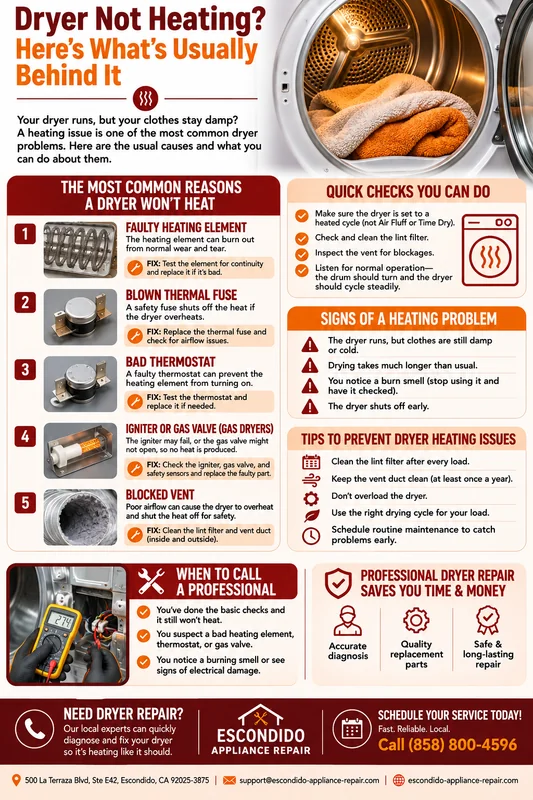
Start With the Basics
Electric dryers need a 240 volt circuit. That means two breakers working together. If one trips, the drum can still spin while the heating element stays cold. Check your electrical panel and reset any tripped breaker fully.
For gas dryers, make sure the gas valve behind the unit is open. Then confirm other gas appliances in your home are working normally.
Also look at your settings. Some cycles, like air fluff, use no heat at all. It sounds obvious, but it is worth a glance.
A Clogged Vent Is the Hidden Culprit
Restricted airflow is behind a huge share of no heat calls. When lint packs the vent, the dryer overheats. Safety devices then shut off the heat to prevent a fire.
Disconnect the vent hose and run the dryer for a minute. If air blows out strongly at the back, the dryer is fine. The blockage is somewhere in the duct. Cleaning the full vent run often restores heat right away.
Common Parts That Fail in Electric Dryers
Heating element. This coil of wire glows red to produce heat. Over time it can break, especially when airflow is poor. A technician tests it for continuity with a multimeter.
Thermal fuse. This small safety device blows when the dryer overheats. Once blown, the heat or the whole dryer stops working. Replacing the fuse without fixing the airflow problem means it will blow again.
High limit thermostat. This part cuts power to the element if temperatures climb too high. A faulty one can shut the heat off early or prevent it from turning on.
Cycling thermostat. It turns the heat on and off during the cycle. When it fails, you may get no heat or inconsistent drying.
Common Parts That Fail in Gas Dryers
Gas models share some of the same safety parts. They also have a few of their own.
- Igniter: It glows to light the gas. A weak igniter may glow but never reach ignition temperature.
- Flame sensor: It tells the dryer the burner lit. If it fails, the gas valve will not stay open.
- Gas valve coils: These open the valve to release gas. Worn coils often cause heat that starts and then quits.
Gas work requires training and the right tools. For safety reasons, this part of the job belongs to a licensed technician.
Warning Signs Not to Ignore
Some symptoms point to more than an inconvenience.
- A burning smell during the cycle
- The outside of the dryer feeling very hot to the touch
- The thermal fuse blowing repeatedly
- Lint collecting around the door or behind the machine
Each of these can signal a fire risk. Dryer fires are more common than most people realize. Stop using the dryer and get it inspected.
Repair or Replace?
Most heating problems cost far less to fix than a new dryer. A typical dryer lasts 10 to 13 years. If yours is younger than that and the drum and motor are healthy, repair usually makes more sense. If the dryer is older and has needed several repairs lately, it may be time to compare costs.
How to Keep Your Dryer Heating Longer
A few easy habits protect the parts that fail most often. Clean the lint screen before every single load, not every few loads. Check the outside vent flap a few times a year to make sure it opens freely.
Avoid overloading the drum. Packing it full forces longer cycles and more heat. Medium loads dry faster and put less stress on the heating element and thermostats.
Listen for changes, too. A new squeak or thump often signals a worn belt or drum roller. Left alone, those worn parts can strain the motor and lead to a bigger repair.
What a Technician Checks
During a service visit, a good tech tests more than the obvious part. Expect them to check voltage at the outlet, continuity on fuses and thermostats, and airflow at the exhaust. On gas models, they also confirm the igniter draws proper current. This full check helps catch a second weak part before it causes another breakdown.
You can help the visit go faster. Note when the problem started and whether the drum still spins. Mention any burning smells, error codes, or recent moves. Have the model number ready, usually found inside the door frame. These details point the technician in the right direction from the start. Photos of the vent and the back of the dryer can also help. Every clue counts.
Fast Dryer Repair in Escondido
Escondido Appliance Repair has fixed dryers for local families since 2001. Our crew has spent over 15 years working on gas and electric models of every kind. We find the real cause, not just the blown part. That way, the same problem does not come back next month.
If your dryer is spinning without heat, pick up the phone. We will help you get back to warm, dry laundry in no time.