
Refrigerator Leaking Water on the Floor: What It Means and What to Do
You step into the kitchen and your sock soaks up a puddle. Then another one shows up the next day. A refrigerator leaking water is easy to brush off at first. But left alone, it can warp flooring, damage cabinets, and invite mold.
Most leaks come from a short list of causes. Here is how to figure out where the water comes from and what to do next.
Find Where the Water Starts
Before anything else, dry the floor completely. Then watch for where new water appears.
- Front of the fridge: Often a defrost drain or door seal issue.
- Back of the fridge: Usually the water supply line or inlet valve.
- Under the unit: Could be the drain pan or a line connection.
- Inside the fridge: Water pooling under crisper drawers points to a clogged drain.
Knowing the location narrows things down fast.
Clogged Defrost Drain
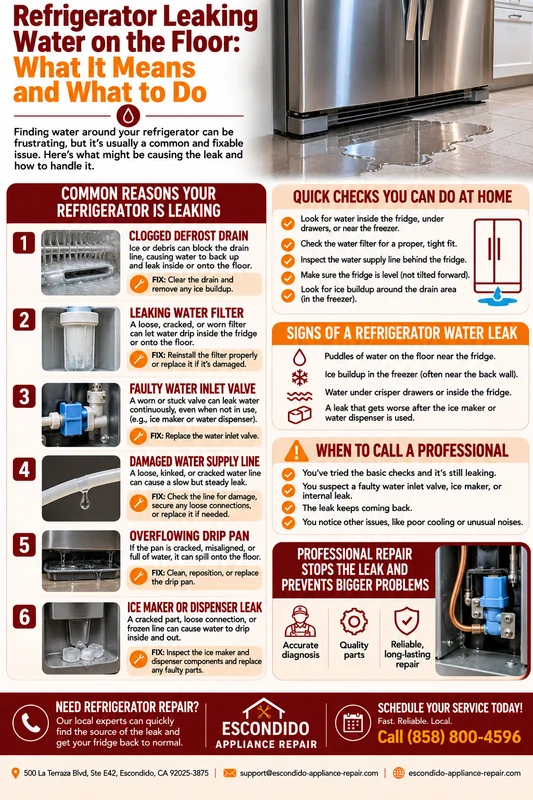
This is the most common cause. During each defrost cycle, melted frost flows through a small drain at the back of the freezer. It empties into a pan underneath the fridge. When food bits or ice block that drain, water overflows. It then trickles into the fridge or onto the floor.
You can often clear it by flushing warm water through the drain opening with a turkey baster. If ice keeps forming in the drain, a failed defrost heater or drain heater may be behind it.
Damaged Water Supply Line
Refrigerators with ice makers or water dispensers connect to a water line. Plastic lines can crack over time, especially if the fridge gets pushed back hard. Copper lines can develop pinhole leaks.
Pull the fridge out carefully and inspect the line. Look for drips at the connection points. A loose fitting may just need tightening. A cracked line should be replaced.
Faulty Water Inlet Valve
The inlet valve controls water flow into the fridge. Hard water in North County can leave mineral deposits that stop the valve from closing fully. A slow leak at the back of the unit often traces back to this part. Replacing it is a straightforward repair for a technician.
Cracked Drain Pan
The drain pan sits under the fridge and collects defrost water, which then evaporates. If the pan cracks, water leaks out instead. Most pans can be reached by removing the bottom front grille. Replacement pans are usually inexpensive.
Worn Door Gaskets
A leaky gasket lets warm, humid air inside. That moisture condenses and can drip down. You may also see frost forming near the door. Inspect the seals for tears or gaps and clean them with warm soapy water.
Water Filter Problems
A filter that is installed incorrectly or the wrong size can leak. The same is true for a cracked filter housing. If the leak started right after a filter change, reseat the filter and check that it locks into place.
Fridge Not Level
Many refrigerators are designed to tilt slightly backward. This helps doors close on their own and lets water drain the right way. If the front sits lower than the back, water can spill forward. Adjust the front leveling legs so the fridge leans back just a little.
Why You Should Not Wait
A small leak today can mean damaged subfloor tomorrow. Laminate and hardwood are especially sensitive. Standing water near electrical outlets is also a safety concern. If the leak continues after these checks, get help.
Leaks From the Dispenser
Sometimes the water is not coming from under the fridge at all. It drips from the dispenser on the door. A cracked dispenser tray or a worn valve inside the door can cause this. Ice chips caught in the chute can also melt and drip down the front.
Inside the freezer, an overfilling ice maker can spill water onto the shelves below. You may notice flat sheets of ice forming under the bin. Over time, that water finds its way out the door.
How to Protect Your Floors
While you sort out the cause, limit the damage. Place towels or a shallow tray where the water collects. Check under the fridge daily for new moisture. If the leak is from the supply line, turn off the water valve behind the fridge or under the sink. Most ice makers can be switched off without affecting cooling.
Also look closely at your flooring. Soft spots, swelling, or dark stains mean water has soaked in. Address that quickly to prevent mold. If you plan to be away for a few days, shut off the water to the fridge as a precaution.
A water leak sensor is a cheap and smart upgrade. These small devices sit on the floor and alert your phone when they detect moisture. Place one behind the fridge, one under the sink, and one near the washer. Catching a leak in minutes rather than days can save thousands in flooring repairs. Many models work with a simple phone app and cost less than a pizza. Some even sound an alarm.
Fast Refrigerator Repair in Escondido
Escondido Appliance Repair has tracked down refrigerator leaks in local kitchens since 2001. Our techs have spent more than 15 years with French door, side by side, and built in models alike. We will trace the leak to its source and fix it the right way. Call us before that small puddle turns into a big repair.