
Why Does My Washing Machine Smell? How to Get Rid of Odors for Good
That musty smell coming from your laundry room is not your imagination. Worse, your clean towels may carry the same funk. A smelly washing machine is surprisingly common, especially with front load models. The cause is almost always trapped moisture and residue.
Let us break down why it happens and how to fix it so it does not come back.
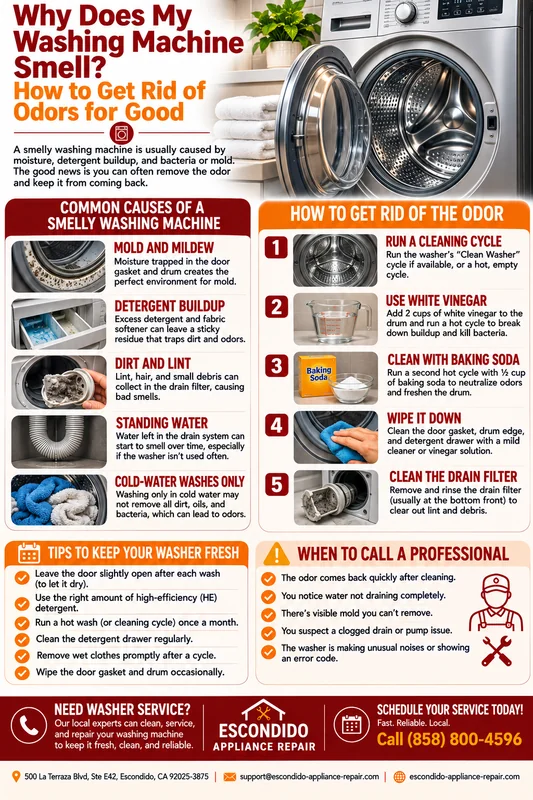
What Causes the Smell
Washers stay damp after every cycle. Add leftover detergent, fabric softener, body oils, and lint, and you have the perfect home for mold, mildew, and bacteria. Over time, a slimy film called biofilm builds up in hidden spots.
Front load washers are the most prone to odors. Their airtight door seals trap moisture inside. Top load machines can smell too, though usually less.
The Usual Hiding Spots
Door gasket. The rubber seal on front loaders has folds that trap water, hair, and lint. Pull it back gently and you may find black spots or slime.
Detergent dispenser. Soap and softener residue collects in the drawer and the cavity behind it.
Drain pump filter. Standing water and debris here can smell like a swamp.
Outer tub. The space between the inner drum and outer tub collects residue you never see.
How to Clean a Smelly Washer
Set aside about an hour. Here is the process we recommend.
- Wipe the door gasket with a mix of water and a little bleach or white vinegar. Get into every fold.
- Remove the detergent drawer and scrub it with an old toothbrush. Clean the cavity behind it too.
- Drain and clean the pump filter if your model has one.
- Run the hottest, longest cycle on an empty machine with a washer cleaning tablet or two cups of bleach.
- Run one more rinse cycle to flush everything out.
- Wipe the drum dry and leave the door open.
Never mix bleach and vinegar in the same cycle. The combination releases harmful fumes.
Habits That Keep Odors Away
Cleaning fixes the smell. Habits keep it from returning.
- Leave the door or lid open between loads so the drum dries
- Move wet clothes to the dryer right away
- Use HE detergent and measure it carefully
- Go easy on fabric softener, which leaves sticky residue
- Run a cleaning cycle once a month
- Wipe the door seal after the last load of the day
Using too much detergent is a big one. More soap does not mean cleaner clothes. Excess suds leave residue that feeds odor causing bacteria.
When the Smell Means Something Else
Sometimes a bad smell points to a mechanical issue.
Poor draining. If water sits in the tub after cycles, the drain pump or hose may be partially blocked. Standing water quickly turns sour.
Sewer smell. A rotten egg odor might come from the household drain, not the washer. A missing trap or dry plumbing line can let sewer gas in.
Burning smell. This is different and more serious. A burning odor may signal a failing motor or belt. Stop using the machine and get it checked.
When Cleaning Is Not Enough
If odors return within days of a deep clean, mold may be growing where you cannot reach. Badly stained gaskets sometimes need replacing. A technician can also check the drain system and pump.
Which Detergents Work Best?
High efficiency washers need low sudsing HE detergent. Regular detergent creates too much foam, which traps grime and leaves residue behind. Look for the HE symbol on the label.
Powder detergents tend to leave less residue than liquids in many machines. If you prefer liquids or pods, measure carefully. For most loads, a smaller dose than the cap suggests is plenty. Modern formulas are concentrated, so a little goes a long way.
Smells That Transfer to Your Clothes
If towels smell sour even after drying, the odor may already be in the fabric. Wash them on hot with a cup of white vinegar and no detergent. Then run them again with a normal amount of detergent and no vinegar. Dry them completely right away.
Athletic wear is especially prone to holding odors. Synthetic fabrics trap body oils. Wash them inside out in cold water and skip fabric softener entirely.
Top Load Washers Need Care Too
Top loaders smell less often, but they are not immune. Residue builds under the agitator and around the rim of the tub. Fill the tub with hot water, add bleach or a washer cleaner, and let it soak for an hour. Then finish the cycle and wipe the rim. Even in our dry inland climate, a closed washer stays humid inside for days.
Many top loaders also have a self clean or tub clean cycle. Run it monthly with the cleaner your manual recommends. If your model has an agitator, check underneath it for buildup when you can. A clean tub keeps both the machine and your clothes smelling fresh. Your laundry room will thank you for the extra few minutes.
Washer Repair You Can Count On
Escondido Appliance Repair has helped local households keep laundry fresh for over twenty years. Our technicians have worked on washers for more than 15 years, from compact stackables to large capacity models. Whether you need a new door gasket or a drain pump, we will handle it. Give us a call and say goodbye to that musty smell.