
How Escondido Summer Heat Affects Your Fridge (and How to Help It)
Escondido summers are no joke. Coastal San Diego might enjoy ocean breezes, but here inland, temperatures often push into the 90s. Heat waves can send them past 100. You feel it, and so does your refrigerator.
A fridge works by moving heat from inside the box to the air around it. When that surrounding air is hot, the job gets much harder. Here is what happens and how to help your fridge get through the season.
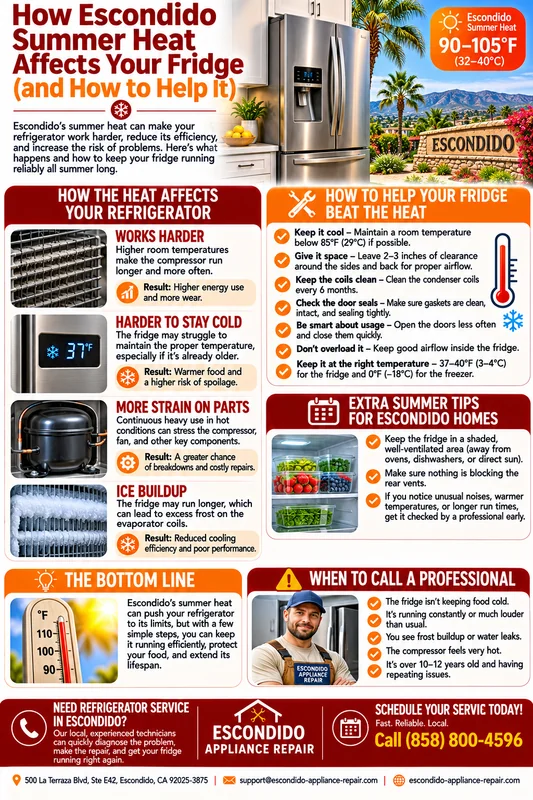
Why Heat Makes Fridges Struggle
Every refrigerator has a condenser that releases heat into your kitchen. The bigger the gap between the coils and the room, the easier this works. On a 100 degree day, that gap shrinks. The compressor runs longer and harder to keep the inside cold.
The result is higher energy use and more wear on key parts. Compressors, condenser fans, and start relays tend to fail more often in summer. It is no coincidence that refrigerator repair calls spike across North County every July and August.
Garage Fridges Have It Worst
Many Escondido homes have a second fridge or freezer in the garage. Garages can easily reach 110°F or more on hot afternoons. Most refrigerators are designed to operate in rooms up to about 90°F to 110°F, depending on the model. Beyond that, they cannot keep food safely cold. If you rely on a garage fridge, consider a model rated for garage use. Otherwise, improve ventilation, add shade, or move it indoors for the hottest months.
Signs Your Fridge Is Overheating
Watch for these warning signs during hot weather:
- The fridge runs constantly without cycling off
- The sides or top feel unusually warm
- Ice production slows down
- Milk and leftovers spoil faster than normal
- You hear clicking from the back every few minutes
That clicking often means the compressor is trying to start and failing. Do not ignore it.
Clean the Condenser Coils Before Summer
This is the single best thing you can do. Dust and pet hair act like a blanket on the coils. Clean them with a coil brush and vacuum before the heat arrives. Do it again midway through summer if you have pets.
Give Your Fridge Room to Breathe
Refrigerators need airflow around them. Leave at least an inch or two of space at the back and sides. Avoid placing the fridge right next to an oven or in direct afternoon sun. Do not stack boxes or bags on top, since some models vent heat upward.
Smart Summer Habits
- Keep the doors closed as much as possible
- Let hot food cool briefly before putting it inside
- Keep the fridge reasonably full, which helps hold cold
- Check that door seals close tightly
- Set the fridge to 37°F and the freezer to 0°F
Every time the door opens, hot air rushes in. Planning what you need before opening the door really helps.
Power Outages and Heat Waves
Extreme heat strains the power grid. Flex alerts and outages are part of life in Southern California. When power returns, surges can hit sensitive control boards. Plugging your fridge into a quality surge protector rated for appliances adds some protection.
During an outage, keep the doors shut. A full freezer holds temperature for about 48 hours. A refrigerator stays safe for about four hours.
What Happens Inside During a Heat Wave
When the kitchen hits 85°F or more, the compressor barely gets a break. Most fridges are designed to cycle on and off. In extreme heat, they may run almost constantly. That steady load generates even more heat behind the unit.
Meanwhile, the door gets opened more often for cold drinks and ice. Each opening lets hot air rush in. Humid air also brings moisture, which turns into frost on the coils. The fridge ends up working twice as hard to stay where it was.
Simple Ways to Cool the Kitchen
Keeping the room cooler helps the fridge too. Close blinds on windows that get afternoon sun. Avoid running the oven during the hottest part of the day. Use a fan to keep air moving around the kitchen. If you have central air, a few degrees cooler indoors takes real pressure off the fridge.
When to Worry About Your Freezer
Freezers in hot garages can thaw partway without you noticing. Place a coin on top of a frozen cup of water. If the coin sinks into the ice, your freezer thawed at some point. That is a sign to check the food and the unit.
If your garage freezer struggles every summer, consider a model rated for wider temperature ranges. Insulating the garage door or adding a vent fan can also help. Keep the freezer full, since frozen items help each other stay cold. A full freezer also handles brief power outages better. Garage fridges that run all summer long often show the first signs of wear by fall. Have them checked before the next heat wave.
Summer Refrigerator Repair in Escondido
If your fridge is losing the battle with the heat, we can help. Escondido Appliance Repair has gotten local fridges through more than twenty hot summers since 2001. Our technicians bring over 15 years of experience and know exactly how inland heat affects cooling systems. We will get your fridge back on track before your groceries pay the price.