
Self Cleaning Oven: Is It Safe and Can It Damage Your Oven?
The self cleaning feature sounds like a dream. Press a button, walk away, and come back to a spotless oven. Many people use it without a second thought. But technicians often have a different view of this feature, and for good reason.
Let us look at how self cleaning works, the real risks, and how to use it wisely.
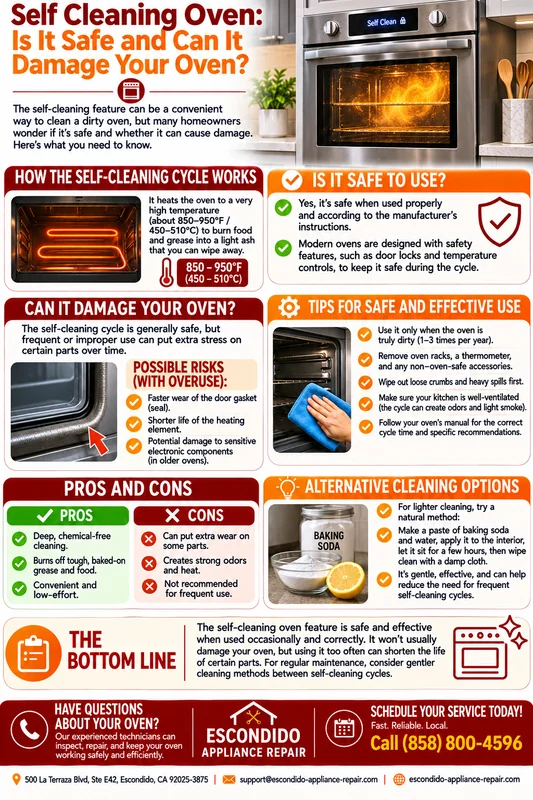
How the Self Cleaning Cycle Works
Traditional self cleaning ovens lock the door and heat the cavity to around 800°F to 900°F. At those temperatures, food residue and grease burn down into a fine white ash. When the cycle ends and the oven cools, you wipe the ash away with a damp cloth.
The cycle usually lasts two to four hours. The door stays locked until the oven cools to a safe temperature.
Some newer ovens offer a steam clean option instead. It uses water and much lower heat to loosen light messes.
Why Technicians Worry About It
Extreme heat is hard on oven parts. Ovens are built to handle it, but the cycle exposes any weakness. Many oven service calls come in right after someone runs a self clean.
Common failures include:
- Thermal fuses that blow and cut power to the oven
- Control boards damaged by heat buildup behind the panel
- Door lock motors that jam, leaving the door locked shut
- Bake elements that burn out under stress
- Temperature sensors that start giving false readings
None of these failures are guaranteed. But the risk goes up as an oven ages.
Is It Safe for Your Home?
The cycle produces smoke and fumes as residue burns away. Most healthy adults just notice an unpleasant smell. However, the fumes can be dangerous for pet birds, which have very sensitive lungs. If you keep birds, move them far away and ventilate well.
People with asthma or breathing issues may also want to avoid the area. Open windows and run the range hood during the cycle.
The outside of the oven gets very hot too. Keep children and pets away from the door.
Timing Matters
The worst time to run self clean is right before a holiday or big dinner. If a part fails, you may be without an oven when you need it most. Repair schedules also fill up quickly around Thanksgiving and Christmas.
If you want to self clean, do it weeks before a big cooking event. That gives time to fix anything that goes wrong.
Tips for a Safer Self Clean
- Remove racks unless the manual says they can stay in
- Wipe up large spills and grease pools first to reduce smoke
- Never use oven cleaner chemicals before a self clean cycle
- Stay home while the cycle runs
- Do not try to force the door open during or after the cycle
Removing heavy buildup first cuts down on smoke and limits the time parts spend under heat stress.
A Gentler Way to Clean
Many technicians recommend skipping the high heat cycle most of the time. Instead, try this simple method. Mix baking soda with a little water to make a paste. Spread it inside the cool oven, avoiding the heating elements. Let it sit overnight. Wipe it out with a damp cloth and spray a little vinegar to remove residue.
It takes more elbow grease, but your oven parts will thank you.
If Something Goes Wrong
Does your oven refuse to heat, show an error code, or stay locked after the cycle? Turn off the breaker for a few minutes, then try again. If that does not help, call a technician. Do not pry the door open, since that can damage the lock and hinges.
How Often Should You Use Self Clean?
There is no need to run the cycle often. For most households, once or twice a year is plenty. If you wipe spills as they happen, you may rarely need it at all. Heavy users who bake and roast daily may need it more.
Some people run it every month out of habit. That much heat cycling adds up and shortens part life. Clean by hand most of the time and save the high heat cycle for heavy buildup.
Steam Clean vs High Heat Clean
Steam cleaning is gentler but less powerful. It works well for light, recent spills. You pour water into the bottom of the oven and run a short cycle. Afterward, you wipe away loosened grime.
For baked on grease, steam alone may not be enough. In that case, a scrub with baking soda paste often finishes the job. Many owners use steam clean for upkeep and skip the high heat cycle entirely.
Keep the Door Gasket Safe
Never scrub the oven door gasket during cleaning. It is delicate and easily torn. A damaged gasket lets heat escape and makes the oven work harder.
Also avoid pulling on the gasket when you wipe the glass. If yours is already frayed or flattened, a technician can replace it quickly. A fresh seal keeps heat in and helps your oven cook evenly again. Gaskets usually clip into small holes around the oven frame, so the swap is quick. The right part for your model makes all the difference.
Expert Oven Repair in Escondido
Escondido Appliance Repair has rescued ovens from failed cleaning cycles since 2001. Door locks, thermal fuses, and control boards are daily work for a team with over 15 years in the trade. If a self cleaning cycle left your oven out of commission, give us a call. We will get it fixed fast.