
Protecting Your Appliances During Power Outages and Public Safety Shutoffs
When the Santa Ana winds kick up, many North County residents brace for more than dry air. SDG&E may cut power in high fire risk areas through Public Safety Power Shutoffs. Add summer heat waves and the occasional storm, and outages are a regular part of life here.
Losing power is inconvenient. But the moment power comes back can be even harder on your appliances. Here is how to protect them before, during, and after an outage.
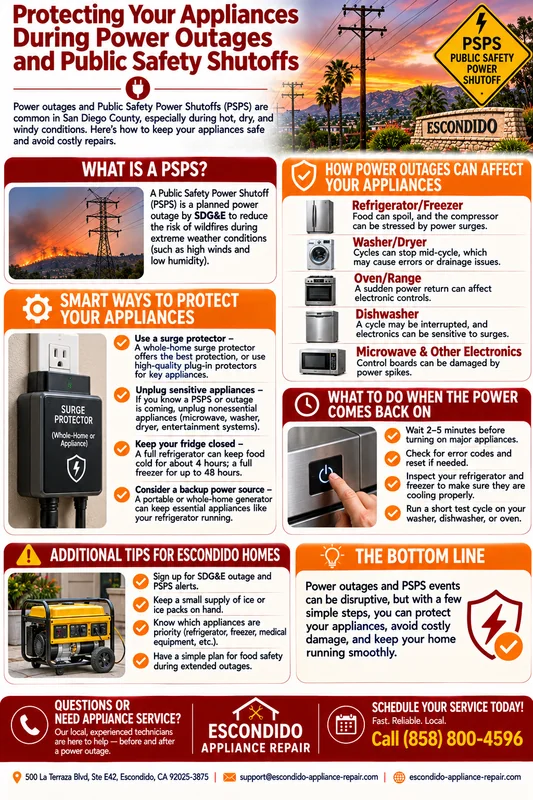
Why Outages Hurt Appliances
Modern appliances rely on electronic control boards. These boards are sensitive to voltage spikes. When power returns, it can come back with a surge or flicker on and off several times. Each flicker stresses compressors, motors, and electronics.
Refrigerators are especially vulnerable. If the compressor tries to restart too quickly after a flicker, it can overheat or damage the start relay.
Before an Outage
SDG&E usually sends alerts before planned shutoffs. Sign up for notifications on their website so you get advance warning. Then prepare.
- Turn the fridge and freezer to their coldest settings a few hours ahead
- Freeze containers of water to fill empty freezer space
- Keep a fridge thermometer in both sections
- Have coolers and ice packs ready
- Charge phones and backup batteries
A packed freezer stays cold far longer than an empty one. Frozen water jugs help fill the space and double as ice for coolers.
During the Outage
Keep the fridge and freezer doors closed. This is the most important rule. A closed refrigerator keeps food safe for about four hours. A full freezer can hold temperature for around 48 hours. A half full freezer lasts about 24.
Unplug sensitive appliances or switch them off. This includes microwaves, dishwashers, washers, dryers, and electronics. Leaving them connected exposes them to the surge when power returns. Leave one lamp on so you know when power is back.
Generators Need Care
If you use a portable generator, keep it outdoors and well away from windows and doors. Carbon monoxide is deadly. Use heavy duty extension cords rated for the load. Never plug a generator into a wall outlet. This backfeeds the grid and can kill utility workers.
Refrigerators can run on generators, but their startup draw is high. Make sure your generator can handle it.
When Power Returns
Do not rush to turn everything on at once. Give the grid a few minutes to stabilize. Then reconnect appliances one at a time, starting with the refrigerator and freezer.
Check food temperatures. Discard perishables that sat above 40°F for more than two hours. When in doubt, throw it out.
Signs of Outage Damage
Watch for these problems in the days after an outage:
- Fridge not cooling or running nonstop
- Error codes on washers, dryers, or ovens
- Dead displays or unresponsive buttons
- Clicking from the refrigerator compressor
- Ice maker that stopped working
These issues often trace back to damaged control boards, relays, or sensors.
Surge Protection Pays Off
A whole house surge protector, installed at your electrical panel, shields every appliance in your home. Point of use surge protectors help with smaller items like microwaves. These are modest investments compared to replacing a control board.
Build a Simple Outage Kit
Keeping a small kit ready makes outages less stressful. Store it somewhere easy to reach in the dark.
- Flashlights and spare batteries
- An appliance thermometer for the fridge and freezer
- A cooler and reusable ice packs
- A battery powered radio or charged power bank
- A printed list of emergency phone numbers
- Paper plates and plastic utensils
Paper plates mean you will not need the dishwasher until power returns.
Medications That Need Refrigeration
If anyone in your home relies on refrigerated medication, plan ahead. Ask your pharmacist how long it stays safe at room temperature. Keep a small cooler and ice packs ready just for it. SDG&E offers a Medical Baseline program for customers who depend on powered medical equipment. Enrolled customers can receive extra notice before planned shutoffs.
Gas Appliances During an Outage
Gas ranges may still work during an outage, though electronic igniters will not. You can usually light burners carefully with a match. Most modern gas ovens will not work without power, since their safety controls need electricity. Never use a gas oven to heat your home.
Also skip the dryer during an outage, even if you have a gas model. Gas dryers still need electricity to turn the drum and run the controls. Save laundry for later and focus on keeping food cold and your family safe. Once power returns, give the fridge an hour to cool back down before restocking it with groceries from the cooler.
Outage Damage Repair in Escondido
If an appliance acts up after a shutoff, we can help. Escondido Appliance Repair has repaired storm and outage damage across North County since 2001. Our technicians have spent more than 15 years diagnosing electrical faults and control failures. Call us and we will get your home running normally again.