
How to Remove Hard Water Buildup From Your Dishwasher in San Diego County
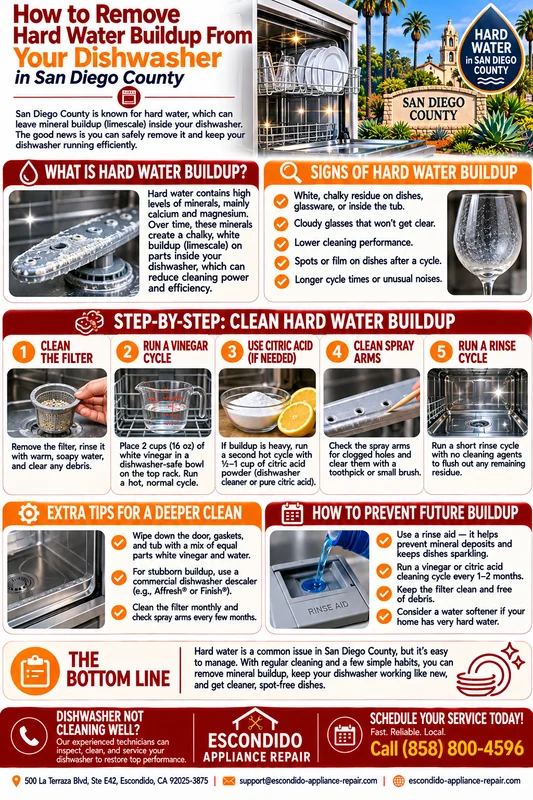
Open your dishwasher and look closely at the tub walls, racks, and heating element. If you see chalky white crust, you are looking at mineral scale. Across San Diego County, it is one of the most common reasons dishwashers lose power and fail early.
Our local water carries a heavy load of calcium and magnesium. Hot water and detergent make those minerals settle out fast. Thankfully, removing the buildup is easier than most people expect.
Why Scale Is More Than a Cosmetic Problem
That white crust is not just ugly. It slowly chokes the machine from the inside.
- Clogged spray arm holes reduce water pressure
- Coated heating elements take longer to heat water
- Scale on the inlet valve screen restricts water flow
- Buildup in the pump area adds strain and noise
Over time, these problems lead to poor cleaning, longer cycles, and repair bills.
What You Will Need
Gather these before you start:
- White vinegar or citric acid powder
- A soft brush and an old toothbrush
- A toothpick or thin wire
- Microfiber cloths
- Rubber gloves
Citric acid is especially effective against heavy scale. You can find it in grocery stores near canning supplies.
Step One: Clear the Filter Area
Pull out the bottom rack. Remove the filter and soak it for about 15 minutes in warm water with a splash of vinegar. Scrub gently with the soft brush. While it soaks, wipe out the sump area underneath.
Step Two: Descale the Spray Arms
Most spray arms unclip or unscrew easily. Soak them in vinegar for 20 to 30 minutes. Then poke each nozzle with thin wire to break loose mineral plugs. Rinse well and shake them to make sure water flows freely through every opening.
Step Three: Scrub Visible Deposits
Dip the toothbrush in vinegar and work on crusty spots along the door, tub corners, and rack rails. Pay attention to the bottom edge of the door, where water and minerals collect. For stubborn spots, let vinegar sit for a few minutes before scrubbing.
Step Four: Run a Descaling Cycle
Put the filter and spray arms back in place. Leave the dishwasher empty.
For vinegar, place a dishwasher safe cup filled with two cups of vinegar upright on the top rack. For citric acid, sprinkle about two tablespoons into the detergent cup or the bottom of the tub. Run the hottest cycle available.
Pick one cleaner per cycle and skip detergent this time. Never combine vinegar or citric acid with bleach.
Step Five: Finish With a Rinse
Run a short rinse cycle afterward to clear any loosened scale. Wipe the interior dry with a microfiber cloth. Leave the door cracked open for an hour to let everything air out.
How Often Should You Descale?
In most North County homes, once a month keeps scale under control. If your water is especially hard or you run the dishwasher daily, consider every two to three weeks.
Keep Scale From Coming Back
Use the built in softener if you have one. Some European brands include a water softening system. It needs dishwasher salt refills to work. Many owners never fill it.
Set water hardness correctly. Many dishwashers let you adjust settings for local water hardness. Check your manual.
Keep rinse aid topped off. It helps prevent mineral spots from forming.
Think about a whole home softener. It protects every appliance and fixture, not just the dishwasher.
Hard Water Spots on the Outside
Scale is not only an inside problem. Stainless steel doors can show white streaks from splashes and drips. Wipe them with a soft cloth dampened with diluted vinegar. Then dry and buff along the grain to prevent new streaks. Avoid steel wool or abrasive pads, which scratch the finish.
Signs Your Dishwasher Needs a Deeper Fix
Sometimes cleaning reveals bigger problems. Watch for these after a descale:
- Water that never gets hot during the cycle
- A wash pump that hums but sprays weakly
- Water that fills slowly or not at all
- Error codes related to heating or filling
These usually point to parts damaged by years of scale. Cleaning will not bring a burned out heater back to life.
Protect Glassware From Etching
Over cleaning can be a problem too. Once your water is softened, use less detergent. Too much detergent in soft water can etch glasses permanently. Adjust your dosage after installing a softener.
If glasses already have a rainbow sheen or permanent cloudiness, they are etched. Vinegar will not remove it. Hand wash your nicest glassware to keep it looking new. Crystal and older glasses are especially vulnerable. A soft cloth and warm water are all your best glasses need. Air drying on a rack helps prevent spots, too.
When Scale Has Already Done Damage
Heavy buildup can ruin heating elements, inlet valves, and pumps. If your dishwasher still struggles after a deep descale, a part may need replacing. Escondido Appliance Repair has handled mineral damage in local dishwashers since 2001. For over 15 years, our crew has replaced scaled valves, pumps, and heaters all over the county. We will restore your dishwasher’s performance and help you protect it going forward.