
Is an Appliance Extended Warranty Worth It?
You have just picked out a new refrigerator. At checkout, the salesperson asks if you want to add a three or five year protection plan. The price seems small compared to the fridge. But is an appliance extended warranty actually worth the money?
The honest answer is that it depends. Here is how to decide.
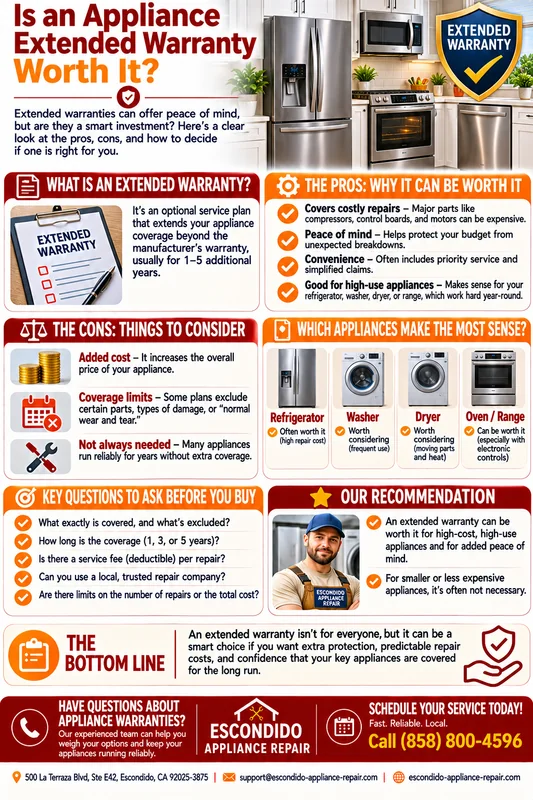
What Extended Warranties Usually Cover
An extended warranty, also called a service plan or protection plan, picks up after the manufacturer’s warranty ends. Most manufacturer warranties cover parts and labor for one year. Some offer longer coverage on specific parts, like compressors or motors.
Extended plans typically cover mechanical and electrical failures from normal use. Many do not cover:
- Cosmetic damage like dents and scratches
- Damage from misuse or improper installation
- Problems caused by power surges, unless stated
- Routine maintenance items like filters and bulbs
- Mineral buildup from hard water
Always read the fine print before buying. The exclusions often matter more than the coverage.
Why Retailers Push Them So Hard
Extended warranties are very profitable for stores. Many customers never file a claim. That is not automatically a reason to say no, but it helps explain the sales pressure.
When a Warranty Might Make Sense
High end appliances. Luxury and built in brands have expensive parts. A single control board or sealed system repair can cost a lot. A plan may pay for itself with one claim.
Appliances packed with electronics. Smart fridges with touchscreens and complex boards carry more potential failure points.
Peace of mind. If an unexpected bill would really strain your budget, a predictable plan cost may be worth it.
When You Can Probably Skip It
Budget appliances. If repair costs could approach replacement costs, the plan may not add much value.
Simple models. Basic washers and dryers with mechanical controls tend to be reliable and affordable to repair.
You already have coverage. Many credit cards extend manufacturer warranties by a year when you use them to buy appliances. Check your card benefits before paying for extra protection.
Questions to Ask Before You Buy
- Who actually handles the repairs? The store, the maker, or a third party?
- Can you choose your own repair company?
- Is there a deductible or service fee per visit?
- How long do claims usually take?
- What happens if the appliance cannot be fixed?
- Does coverage start when you buy or after the factory warranty ends?
Some plans use national networks with long wait times. If your fridge dies in July, waiting a week for a technician is no fun.
Consider Self Insuring
Another approach is to set aside the money you would have spent on the plan. Put it in a savings account labeled for appliance repairs. If something breaks, you have funds ready. If nothing breaks, you keep the money.
For many households with several appliances, this strategy works out well over time.
Maintenance Is the Best Warranty
No plan beats proper care. Cleaning coils, filters, and vents prevents many failures that warranties would otherwise cover. Regular maintenance also helps your appliances outlive their expected lifespan.
Read the Manufacturer Warranty First
Before buying extra coverage, read the warranty that comes with the appliance. Some brands now offer longer protection on major parts. A refrigerator may include five or ten years on the sealed system. Many washers come with extended coverage on the motor or drum.
Register your appliance with the manufacturer after you buy it. This makes claims much easier later. Keep the receipt and the model and serial numbers somewhere safe.
Understand Home Warranty Plans
Home warranty plans are different from appliance extended warranties. They cover several systems and appliances in the home for a yearly fee. Each claim usually requires a service fee. Coverage limits can be low, and claims are often disputed.
Some homeowners have good experiences with them. Others find the limits and wait times frustrating. Read reviews and the full contract before signing up.
Keep Records of Every Repair
If you do buy a plan, keep a file of every service visit. Note the date, the problem, and what was done. Some plans replace an appliance after a certain number of repairs. Good records help you make that case.
Also check whether the plan lets you pick your own local technician. Plans that force you to use a national network can mean long waits and unfamiliar techs. A plan that reimburses local repairs gives you more control. Ask about this before you sign, not after something breaks. Finally, set a calendar reminder for when the plan expires. Many people forget their coverage end date and miss a chance to file a valid claim.
Out of Warranty? We Can Help
Escondido Appliance Repair works on appliances whether they are covered or not. Our company opened in 2001, and our technicians have more than 15 years of experience behind them. We offer honest pricing and repairs that last. An expired warranty does not have to mean an expensive surprise.