
How Long Do Appliances Last? Average Lifespan by Type
Every appliance has a clock ticking inside it. Knowing roughly how long each one should last helps you plan ahead. It also helps you decide whether a repair makes sense or whether it is time to start shopping.
Here is a practical guide to average appliance lifespan, plus what shortens and stretches those numbers.
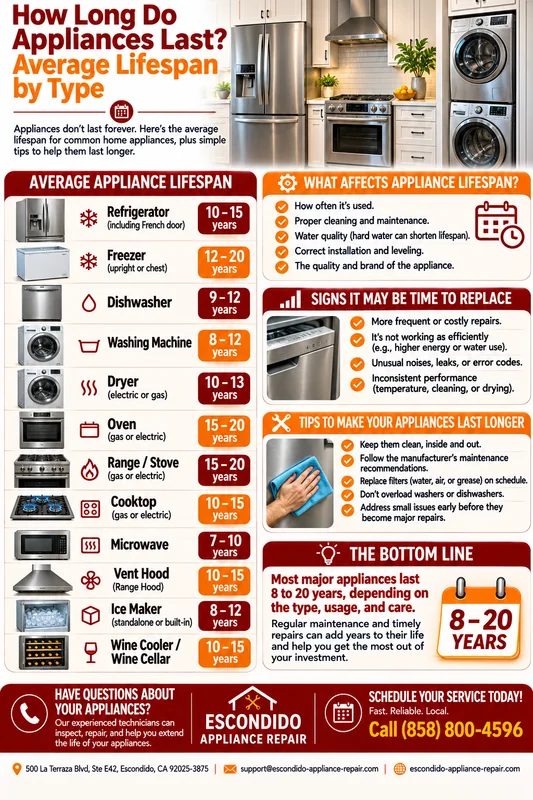
Average Lifespan at a Glance
These figures are typical ranges. Your results depend on brand, use, and maintenance.
- Refrigerator: 10 to 15 years
- Freezer: 11 to 16 years
- Gas range: 13 to 17 years
- Electric range: 11 to 15 years
- Wall oven: 13 to 16 years
- Dishwasher: 9 to 12 years
- Washing machine: 10 to 14 years
- Dryer: 10 to 13 years
- Microwave: 8 to 10 years
- Garbage disposal: 8 to 12 years
Notice that gas ranges often outlast electric ones. They have fewer electronic components that can fail.
Newer Does Not Always Mean Longer Lasting
Many homeowners notice that newer appliances do not seem to last as long as their parents’ did. There is some truth to that. Modern models pack in electronic controls, sensors, and smart features. These add convenience and efficiency, but they also add parts that can fail.
The upside is that modern appliances use far less water and energy. Many also run quieter and offer better performance.
What Shortens Appliance Life
Several everyday factors wear appliances down faster than normal.
Hard water. In Escondido and much of North County, minerals build up inside dishwashers, washers, and ice makers. This scale clogs valves, coats heating elements, and strains pumps.
Heat. Refrigerators in hot garages or sunny kitchens work much harder. Inland summers make this a real concern here.
Overloading. Stuffing washers and dryers beyond capacity strains motors, bearings, and belts.
Skipped maintenance. Dirty coils, clogged filters, and neglected vents all force appliances to work harder.
Power surges. Electronic control boards are sensitive. Surges from storms or outages can damage them.
What Helps Appliances Last Longer
Small habits make a big difference.
- Clean refrigerator coils twice a year
- Rinse the dishwasher filter monthly
- Clean the dryer vent every year
- Avoid overloading the washer
- Use surge protectors for sensitive electronics where practical
- Fix small problems before they turn into big ones
Appliances that get regular care routinely beat the averages. We see well maintained refrigerators still going strong at 18 or 20 years.
Signs Your Appliance Is Near the End
Age alone is not the only factor. Watch for these clues:
- Repairs are becoming frequent
- Energy bills keep climbing
- Performance keeps slipping even after service
- Replacement parts are hard to find
- Rust or structural damage appears
When several of these show up together, replacement may be worth considering.
Repair or Replace Based on Age
A simple approach works for most people. If the appliance is in the first half of its expected lifespan, repair is usually the smart choice. If it is past that point, compare repair cost to replacement cost. When a repair costs more than half the price of a new unit, replacement often makes more sense.
Every situation is different, though. A high end refrigerator may be worth repairing even at 15 years.
Brand and Build Quality Matter
Not all appliances age the same way. Premium brands often use sturdier materials and better seals. Budget models may cut corners on bearings, hinges, and plastics. That said, a well cared for budget washer can outlast a neglected high end one.
Parts availability also matters. Common brands have parts available for many years. Some imported or discontinued models become hard to repair once parts dry up.
How Climate Plays a Role
Our local climate has its own effect. Inland heat makes refrigerators and freezers work harder for several months each year. Dry Santa Ana winds carry dust that clogs coils and vents. Coastal homes, by contrast, deal with salty air that can rust metal parts.
Escondido sits far enough inland that heat and dust are the bigger concerns. Regular coil cleaning and vent care go a long way here.
Plan Ahead for Replacement
If an appliance is near the end of its expected life, start budgeting now. Research models before you are forced to buy in a hurry. That way, you can wait for a good sale instead of paying full price during an emergency.
Measure the space before you shop. Many newer refrigerators are deeper or taller than older ones. Doorways and hallways matter too, since a fridge that will not fit through the kitchen door is a costly surprise. Planning early also gives you time to compare energy ratings and warranties. Check the delivery path, too, including stairs, tight corners, and narrow gates leading to the house.
Get an Honest Opinion
Escondido Appliance Repair has guided local homeowners through these decisions since 2001. Our technicians have seen appliances of every age during more than 15 years in the field. We will tell you honestly if your appliance has good years left or if it is time to move on. Call us for a straight answer.