
Why Clothes Take Forever to Dry (and How to Fix It)
Sixty minutes on high heat. Then another forty. Then the towels still feel damp in the middle. When clothes take forever to dry, it eats up your time and your energy budget. It also tells you something in your laundry setup is not working the way it should.
The dryer is not always the guilty party. Sometimes the washer, the load, or the vent shares the blame. Let us sort it out.
Your Washer Might Be the Real Problem
A dryer can only remove so much water. If clothes come out of the washer dripping, drying will drag on.
Pick up a load right after the final spin. It should feel damp, not soaking. If it is heavy and wet, the washer may not be spinning fast enough. Causes include an unbalanced load, a worn drive belt, a drain problem, or a faulty motor control. Fixing the washer can cut drying time dramatically.
Also check the spin setting. Choosing a high spin speed for towels and cottons removes much more water.
Overloaded or Underloaded Drums
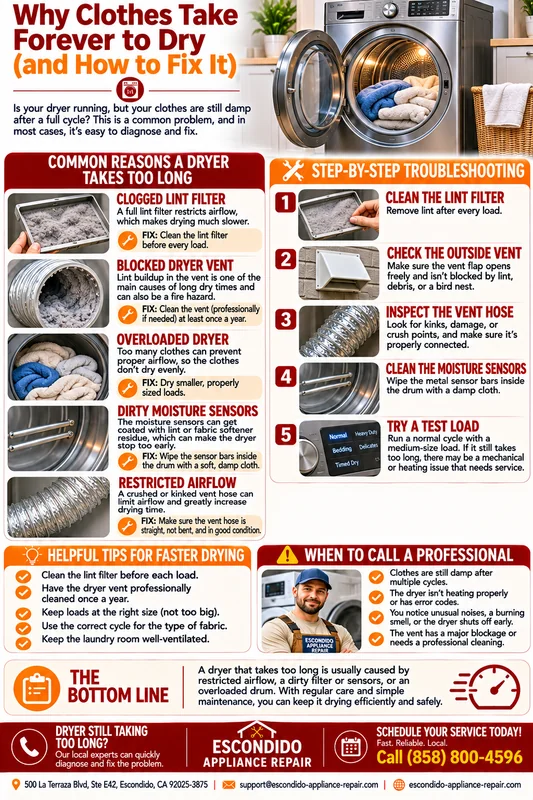
Clothes need room to tumble. When the drum is packed full, warm air cannot circulate through the fabric. Items in the middle stay wet while the outside gets hot.
Oddly, very small loads can also dry poorly. A single item may not tumble enough to trigger moisture sensors correctly. For best results, fill the drum about halfway to two thirds.
Dirty Moisture Sensors
Many dryers use sensor bars inside the drum to detect moisture. When they detect dryness, the cycle ends. Fabric softener and dryer sheets leave a waxy film on these bars. The sensors then misread the load and stop too early, or run too long.
Find the two metal strips, usually near the lint screen. Wipe them with a soft cloth and a little rubbing alcohol. It takes thirty seconds and can make a noticeable difference.
A Lint Screen That Looks Clean but Is Not
Your lint screen may look clear after you pull off the fuzz. But residue can clog the fine mesh. Run water over it. If the water pools instead of passing through, scrub the screen with warm soapy water and a soft brush.
Restricted Venting
A partially blocked vent is one of the biggest causes of slow drying. Moist air cannot escape, so the clothes sit in a humid drum. Check that the outside flap opens fully when the dryer runs. Look for crushed or kinked ducts behind the machine. Long vent runs may need professional cleaning.
Parts That Cause Slow Drying
If the basics check out, look deeper.
- Heating element or gas igniter: May produce weak or inconsistent heat.
- Cycling thermostat: Can shut heat off too soon.
- Blower wheel: If cracked or clogged, it moves less air.
- Drum seals: Worn felt seals let air leak around the drum.
- Timer or control board: May end cycles early.
These parts require testing with proper tools to confirm.
Using the Right Cycle
Delicate and permanent press cycles use lower heat. They protect fabrics but take longer for heavy items. Towels, jeans, and bedding dry best on regular or heavy cycles. Separating heavy items from light ones also helps everything finish at the same time.
Room Conditions
A dryer installed in a small closet without ventilation recycles warm, humid air. If your laundry space feels hot and sticky, the dryer may be struggling to pull in dry air. Louvered doors or a few inches of open space can help.
The Washer and Dryer Should Match
Pairing a high capacity washer with a small dryer causes problems. The washer sends over more laundry than the dryer can handle at once. You end up overloading the drum or splitting loads. Ideally, your dryer capacity should be about twice the washer drum size. That gives clothes room to tumble.
Gas vs Electric Drying Time
Gas dryers usually heat up faster than electric models. That often means slightly shorter cycles. Electric dryers are common in homes without a gas line. If your electric dryer seems slow, have the outlet checked for full voltage. A dryer running on half power may tumble but barely heat.
Ventless and Heat Pump Dryers
Some newer homes use ventless or heat pump dryers. These models are more efficient, but they naturally take longer to dry. That is normal. They also need their lint filters and condensers cleaned often. A clogged condenser in a heat pump dryer can double drying times.
If you recently switched to a heat pump dryer, adjust your expectations. Cycles may run 30 to 60 minutes longer than a vented dryer. The tradeoff is much lower energy use and gentler drying. Clean the filters after every load, and check the condenser according to the manual. That habit keeps cycle times from slowly creeping up. Heat pump dryers also run cooler, which is easier on delicate fabrics. Many owners find their clothes last noticeably longer as a result.
Faster Drying Starts With a Diagnosis
Escondido Appliance Repair has solved slow drying problems for local families since 2001. With over 15 years of practical know how, our technicians look at the whole laundry system, not just one part. We will find what is slowing you down and fix it. Call us and get your laundry day back on schedule.