
Dishwasher Not Cleaning Dishes? Hard Water Might Be the Reason
Cloudy glasses. Gritty film on plates. Bits of food stuck to bowls that just came out of a full cycle. If this sounds familiar, you are not alone. A dishwasher not cleaning dishes is one of the top complaints we hear from homeowners across Escondido and North County.
Sometimes the cause is a broken part. Very often, though, the real problem is the water itself.
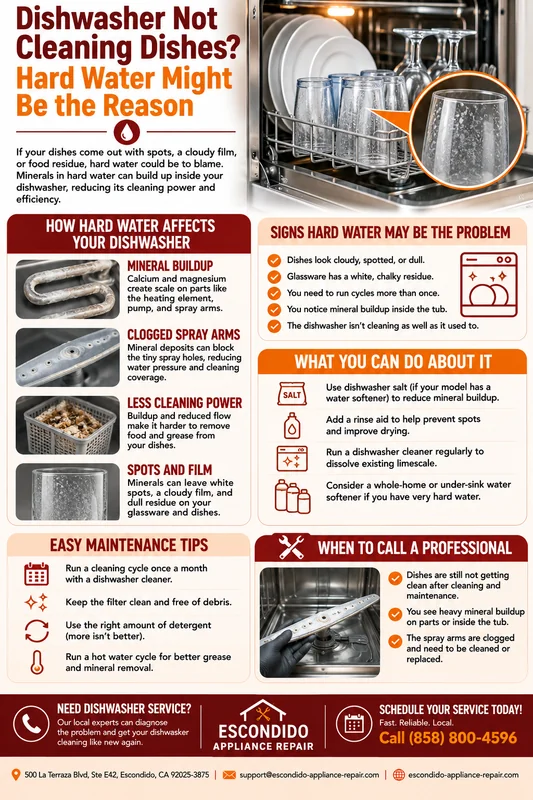
Why Hard Water Hits Dishwashers So Hard
San Diego County has some of the hardest water in the country. Much of it travels hundreds of miles from the Colorado River, picking up calcium and magnesium along the way. When that water heats up inside your dishwasher, those minerals come out of solution. They cling to dishes, spray arms, filters, and the heating element.
The result is a white chalky film. Over time, the same minerals clog tiny holes in the spray arms. Less water reaches your dishes, and cleaning performance drops month after month.
How to Tell If Hard Water Is the Problem
Look for these clues:
- White spots or haze on glassware that will not wipe off easily
- Crusty buildup around the spray arm holes
- A rough, scaly layer at the bottom of the tub
- Detergent that does not seem to dissolve fully
A simple test helps confirm it. Soak a cloudy glass in white vinegar for five minutes. If the film disappears, minerals were the cause. If it stays, the glass may be etched, which is permanent damage from soft water and too much detergent.
Easy Fixes You Can Try Today
Use a rinse aid. Rinse aid helps water sheet off dishes instead of drying into spots. It is one of the cheapest upgrades you can make.
Pick a detergent made for hard water. Many pods and powders include softening agents. Avoid cheap gels that struggle with mineral rich water.
Run a vinegar or citric acid cycle. Once a month, run an empty hot cycle with a dishwasher cleaner or a cup of vinegar up top.
Clean the spray arms. Remove them and clear each hole with a toothpick. Rinse under hot water before reinstalling.
Run hot water at the sink first. This ensures the dishwasher starts filling with hot water instead of cold.
When It Is Not the Water
Hard water explains a lot, but not everything. If your dishes come out dirty even after these steps, a part may be failing.
- Clogged filter: Food debris blocks water flow and redeposits grime on dishes.
- Weak wash pump: You may hear a hum but little spraying action.
- Faulty water inlet valve: The machine fills with too little water to clean properly.
- Broken heating element: Water that stays lukewarm cannot dissolve grease or detergent.
- Detergent dispenser not opening: Pods sit unused at the end of the cycle.
These issues need testing with proper tools. A technician can pinpoint the faulty component and often replace it on the spot.
Should You Install a Water Softener?
A whole house softener protects every appliance and fixture in your home. Your dishwasher, washing machine, and water heater all last longer with softer water. It is a bigger investment, but many Escondido homeowners find it pays off. If a softener is not in the budget, the habits above still make a noticeable difference.
Loading Matters More Than You Think
Even the best dishwasher struggles when loaded poorly. Face dirty surfaces toward the center spray. Do not let tall items block the spray arms. Keep bowls from nesting together. Scrape off large food chunks, but skip the full prerinse. Modern detergents actually need some food soil to work well.
Common Detergent Mistakes
Detergent choice matters more than most people think. Using too little leaves food behind, especially with hard water. Using too much can leave a cloudy residue that looks a lot like mineral film. Follow the dosing guide on the package and adjust for your water.
Powders let you control the amount, which helps fine tune results. Pods are convenient, but always place them in the dispenser, not loose in the tub. Store detergent in a dry spot, since humidity makes powders clump and pods stick together.
Is It Time for a New Dishwasher?
Most dishwashers last about nine to twelve years. If yours is near that age and needs a major part, compare costs carefully. Rust inside the tub, cracked racks, and repeated leaks are signs the end is close. A younger machine with cleaning issues, though, is usually worth a repair.
Energy matters too. Older dishwashers use far more water per load than modern models. Past ten years with a pricey repair ahead? A new efficient unit may pay you back over time. For newer machines, though, a single part rarely justifies a replacement. Ask a technician to compare both options for you. It costs nothing to ask.
Get Professional Dishwasher Repair in Escondido
If your dishes still are not coming out clean, let us take a look. Escondido Appliance Repair opened its doors in 2001. Our technicians have well over a decade and a half of field experience. We know exactly how local water affects dishwashers from Bosch to Whirlpool. We will find the cause and help you get sparkling dishes again.