
Front Load vs Top Load Washers: Which Lasts Longer and Costs Less to Repair
Shopping for a new washer usually starts with one big question. Front load or top load? Each design has loyal fans. Each also comes with tradeoffs that are not always obvious in the showroom.
From a repair technician’s point of view, the differences show up years later. Here is how the two compare on lifespan, repairs, and everyday use.
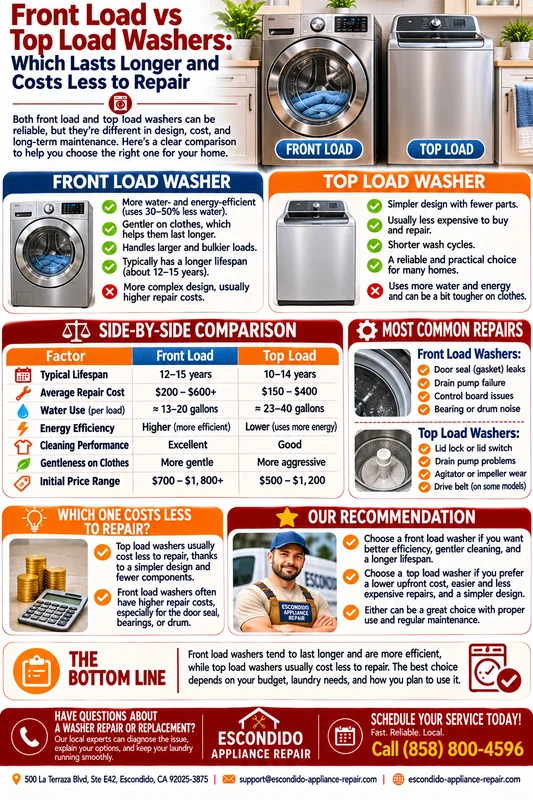
How the Designs Differ
Top load washers come in two styles. Agitator models use a center post to move clothes. High efficiency top loaders use a low profile impeller instead. Both fill from the top, and you load clothes standing up.
Front load washers tumble clothes through a small amount of water. They rely on gravity and drum rotation rather than an agitator.
Lifespan Comparison
Both types often last 10 to 14 years with good care. In our experience, simple top load agitator models tend to be the most durable. They have fewer electronics and sturdier mechanical parts.
Front loaders can last just as long. But they are more sensitive to maintenance habits, detergent use, and load balancing. Neglect shortens their life faster.
Common Repairs for Front Load Washers
- Door gaskets that tear or grow mold
- Door locks that fail and stop cycles
- Drain pumps clogged by coins and small items
- Drum bearings that wear out and cause loud roaring
- Shock absorbers that let the drum bounce
Bearing replacement is the most expensive common repair. It often requires taking much of the machine apart.
Common Repairs for Top Load Washers
- Lid switches or lid locks
- Drive belts or motor couplings
- Agitator dogs that wear out on older models
- Suspension rods that let the tub bang
- Shift actuators on high efficiency models
Most top load repairs are less involved. That often means lower labor costs.
Water and Energy Use
Front loaders win here. They use noticeably less water per load. They also spin faster, removing more water. That shortens drying time and lowers dryer energy use. With SDG&E rates and California water concerns, this is a real advantage.
High efficiency top loaders close part of the gap, but most front loaders still lead.
Cleaning Performance
Front loaders are generally gentler on fabrics and clean very well. Agitator top loaders can be rough on delicate items but handle heavy dirt well. Impeller top loaders sit somewhere in between.
The Odor Question
Front loaders are known for musty smells. The airtight door seal traps moisture. Leaving the door open and wiping the gasket solves most of this. Top loaders rarely have serious odor issues.
Comfort and Space
Front loaders can stack with a dryer, which saves space in small laundry rooms. They also fit under counters. On the other hand, loading means bending down unless you add a pedestal.
Top loaders are easier on your back. You can also add a forgotten sock mid cycle on most models.
Which Should You Choose?
Choose a top loader if you want simplicity, easy loading, and lower repair costs. Choose a front loader if water savings, energy efficiency, and stackability matter more. Either way, choosing a reliable brand and following basic maintenance makes the biggest difference.
What About Washer Dryer Combos?
All in one washer dryer combos have become more popular. They wash and dry in the same drum, which saves space. They are great for small apartments and condos without room for two machines.
There are tradeoffs, though. Drying takes much longer than a separate dryer. Load sizes are smaller. Because one machine does both jobs, a single failure takes away both washing and drying. Repairs can also be more complex.
Smart Features and Repairs
Many new washers come with apps, WiFi, and automatic detergent dispensers. These features add convenience. They also add circuit boards, sensors, and software. More electronics mean more things that can fail over the years.
If you value simplicity, look for a model with basic controls. If you love smart features, choose a brand known for solid support and available parts.
Installation Tips for Either Type
Proper installation prevents many early repairs. Make sure the washer is level and on a solid floor. Use new hoses rather than reusing old ones. Leave a few inches behind the machine so hoses do not kink.
Also check the drain height. The drain hose should sit at the height the manual specifies, usually inside a standpipe. If it is too low, water can siphon out during the wash. If it is too high, the pump strains. Getting these details right on day one helps either type of washer reach its full lifespan. Finally, read the manual’s leveling and hose sections before the first load. Ten minutes of setup can prevent years of shaking, leaking, and service calls. Your new washer deserves a solid start.
Repair Help for Any Washer
No matter which style sits in your laundry room, we can fix it. Escondido Appliance Repair has worked on both designs across North County since 2001. Agitators, impellers, tumbling drums: our techs have handled them all for over 15 years. Call us for fast, honest service.