
How Hard Water in North County Shortens Your Appliance Lifespan
Look at your showerhead or faucet aerator. If you see crusty white deposits, you already know what hard water looks like. Now imagine that same crust forming inside your appliances, out of sight, every single day.
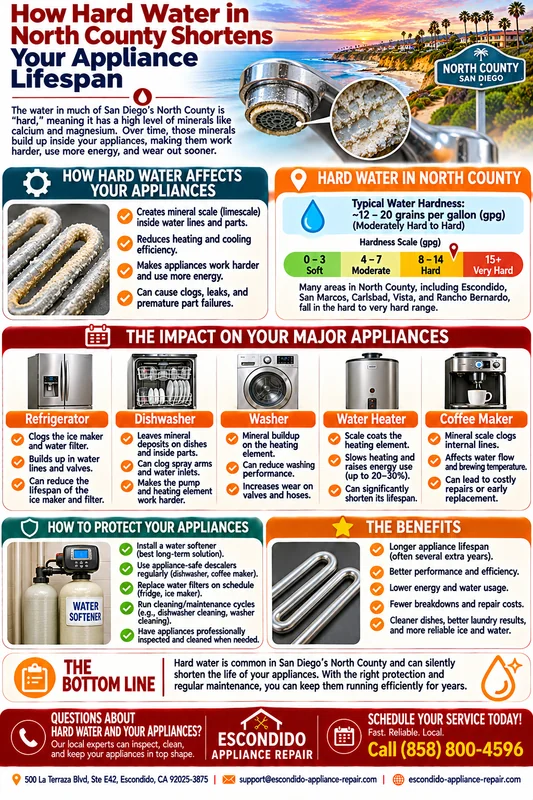
Hard water is a fact of life in Escondido and across North County. It is also one of the quietest causes of appliance breakdowns we see. Here is how it affects your home and what you can do about it.
Where Our Hard Water Comes From
Much of San Diego County’s water is imported. A large share comes from the Colorado River, which flows through mineral heavy rock for hundreds of miles. By the time it reaches local taps, it carries high levels of calcium and magnesium. Water hardness here often ranks among the highest of any major U.S. region.
These minerals are not a health risk. But for appliances, they are a slow motion problem.
How Minerals Damage Appliances
When hard water is heated or evaporates, the minerals separate out and harden into scale. Scale is stubborn. It sticks to metal, plastic, and rubber, and it builds in layers.
That causes three main problems:
- Blocked water flow through valves, screens, and small passages
- Insulated heating elements that waste energy and overheat
- Extra friction and strain on pumps and moving parts
Dishwashers
Dishwashers face hard water at high temperatures in every cycle. Scale coats heating elements, clogs spray arms, and jams inlet valves. Many local dishwashers fail years earlier than they should because of mineral damage.
Washing Machines
Minerals react with detergent and reduce how well it cleans. People often compensate by adding more soap. That creates residue, odors, and extra wear. Scale can also build up on inlet valves and heating elements in models that heat water internally.
Refrigerators With Ice and Water
The water inlet valve is a frequent casualty. Mineral buildup prevents it from opening or closing properly. That can mean a dead ice maker, a slow dispenser, or a leak behind the fridge. Water filters also clog faster in hard water areas.
Water Heaters
Though not a kitchen appliance, your water heater takes a beating. Sediment collects at the bottom of the tank. It forces the heater to work harder and can cause popping or rumbling noises. Flushing the tank yearly helps a lot.
Coffee Makers and Small Appliances
Espresso machines, coffee makers, and kettles all suffer from scale. Descaling them regularly keeps them working and tasting right.
Warning Signs to Watch For
- White film on dishes and glassware
- Stiff, dingy laundry
- Slow ice production
- Longer dishwasher or washer cycles
- Visible crust around nozzles and fittings
Spotting these early lets you act before a part fails.
Ways to Fight Back
Install a water softener. A whole home softener removes minerals before they reach your appliances. It is the most complete solution.
Use appliance specific products. Rinse aid, hard water detergents, and monthly descalers all help.
Replace filters on schedule. Refrigerator filters may need changing sooner here than the label suggests.
Clean regularly. Monthly descaling of dishwashers and washers prevents heavy buildup.
Adjust hardness settings. Some dishwashers let you set local water hardness for better results.
Hard Water and Your Health
Hardness itself is not a health concern. Calcium and magnesium are natural minerals. Your water district publishes an annual water quality report if you want details. The real cost of hard water shows up in your appliances, pipes, and fixtures.
Softener vs Filter: What Is the Difference?
People often confuse water softeners and water filters. A softener swaps calcium and magnesium for sodium or potassium. It targets scale directly. A filter removes things like chlorine, sediment, or odors. Most filters do not reduce hardness much.
For appliance protection, a softener is the tool that matters. A filter can improve taste for drinking water. Many homes use both.
Saltless Systems
Some homeowners prefer salt free conditioners. These do not remove minerals. Instead, they change how minerals behave so they cling less to surfaces. Results vary, so research products carefully before buying.
Whatever system you choose, have it sized for your household water use. An undersized softener runs out of capacity quickly. Ask the installer to test your water hardness first. Then set the system based on real numbers rather than guesses. Proper setup protects your appliances far better than a system that runs on autopilot. A good installer will also show you how to check salt levels and run a regeneration cycle when needed. Ask for that.
Local Experience Makes a Difference
A technician who works in North County every day recognizes hard water damage instantly. Escondido Appliance Repair has fought mineral buildup since opening in 2001. Our technicians have over 15 years of experience, and we know which parts fail first under local conditions. We can repair the damage and help you protect your appliances for years to come.