
Induction vs Gas vs Electric Cooktops: Repair Costs Compared
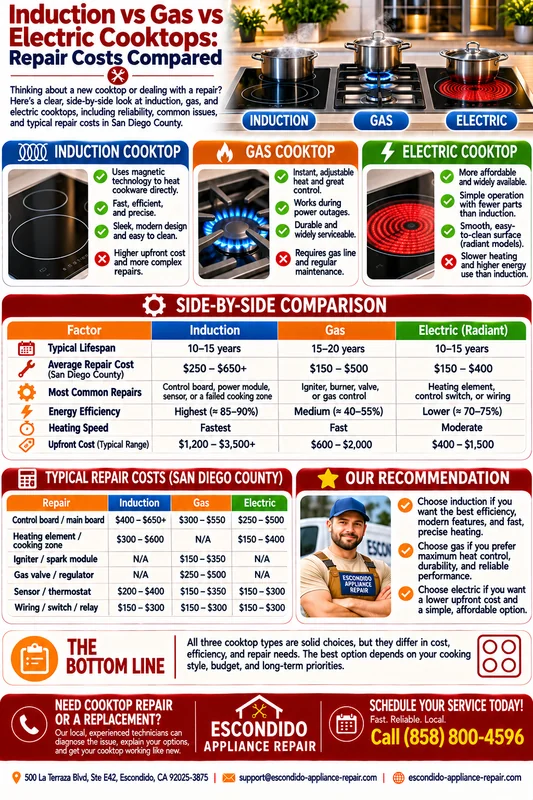
Choosing a cooktop used to be simple. You either had gas or you had electric. Today, induction has entered the conversation in a big way. California’s push toward electrification and rebate programs has many homeowners considering a switch.
Most comparisons focus on cooking performance. But long term ownership costs matter too. Here is how gas, electric, and induction cooktops compare when something goes wrong.
Gas Cooktops
Gas cooktops are mechanically simple. Gas flows through a valve, sparks light the burner, and you control the flame with a knob.
Common repairs:
- Igniters and spark modules
- Spark switches behind the knobs
- Clogged burner heads and ports
- Gas valves, less often
Most gas cooktop repairs are affordable. Parts are widely available, and many problems come down to cleaning. Gas cooktops also keep working during power outages, though you may need to light them with a match.
Gas work does require a trained technician because of safety concerns. Leaks are rare but serious.
Radiant Electric Cooktops
These are the smooth glass tops with heating elements underneath. Older coil style electric cooktops fall into this category too.
Common repairs:
- Burned out radiant elements
- Faulty infinite switches that control heat
- Hot surface indicator lights
- Cracked glass tops
Element and switch repairs are moderately priced. The big expense is the glass. A cracked cooktop surface can cost a lot to replace, sometimes approaching the price of a new unit. Coil cooktops are the cheapest of all to repair, since coils simply plug in.
Induction Cooktops
Induction uses electromagnetic fields to heat the pan directly. The glass surface stays relatively cool. It is fast, precise, and very efficient.
Common repairs:
- Power boards and inverter boards
- Cooling fans
- Touch control panels
- Cracked glass
Induction cooktops rely heavily on electronics. When they fail, the repair usually involves circuit boards. These parts cost more than igniters or elements. Repairs also require a technician experienced with induction systems.
The cooling fan deserves extra attention. If it fails or clogs with dust, internal electronics can overheat. Keeping vents clear helps prevent expensive board failures.
Repair Costs Side by Side
In general terms:
- Lowest typical repair cost: Coil electric and gas
- Moderate: Radiant glass top electric
- Highest: Induction, due to electronic boards
That does not make induction a bad choice. These units tend to be reliable when installed and used correctly. But when something does fail, expect a higher bill.
Everyday Wear and Tear
Gas grates and burners take a beating but are easy to clean or replace. Glass tops, both radiant and induction, can scratch or crack. Avoid dragging cast iron across the surface. Never use glass tops as extra counter space for heavy items.
Energy and Rebates
Induction is the most efficient of the three. It also avoids indoor combustion. California rebate programs may help offset the cost of switching from gas. Check current offers before you buy, since they change often.
Keep in mind that switching from gas to induction may require electrical upgrades.
Which One Is Right for You?
Choose gas if you want low repair costs and outage resilience. Choose induction for speed, efficiency, and cleaner indoor air. Radiant electric sits in the middle as an affordable, familiar option.
Cookware Compatibility
Induction only works with magnetic cookware. Cast iron and most stainless steel work well. Aluminum, copper, and glass will not heat unless they have a magnetic base. Test your pans with a fridge magnet. If it sticks firmly to the bottom, the pan will work.
Switching may mean replacing some cookware. Factor that into the cost.
Noise and Behavior
Induction cooktops can buzz or hum, especially at high settings. This is normal and comes from the pan and the electronics. Cooling fans may keep running after you turn the burners off. That is also normal. Persistent clicking, error codes, or burners that shut off on their own are not.
Cleaning Tips for Each Type
- Gas: Soak grates and caps, clear ports, and keep igniters dry.
- Radiant electric: Use a cooktop cleaner and a razor scraper for burnt spots.
- Induction: Wipe spills quickly. Since the glass stays cooler, food rarely burns on.
Proper cleaning prevents many repair calls in the first place.
Avoid abrasive pads on any glass surface. For gas grates, a soak in hot soapy water loosens most grime overnight. Never put enamel coated grates in the dishwasher unless the manual allows it. Stick with the cleaning products your manual recommends. Some generic sprays leave residue that bakes onto the glass and is tough to remove later.
Cooktop Repair Across Escondido
Whatever cooktop you choose, we can keep it running. Escondido Appliance Repair has fixed gas, electric, and induction cooktops since 2001. We have spent over 15 years learning the quirks of burners, radiant elements, and induction power boards. Call us for a clear diagnosis and an honest repair quote.