
Microwave Running but Not Heating: What’s Going On
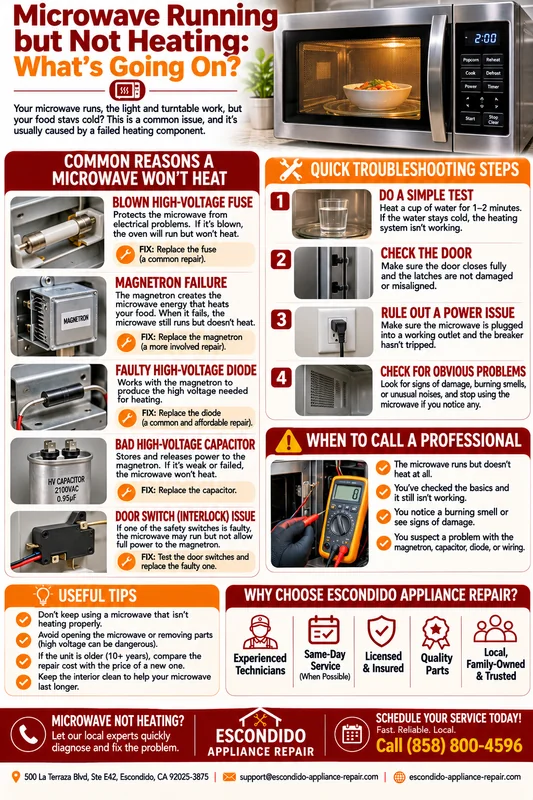
The light is on, the turntable spins, the fan hums. Two minutes later, your coffee is still cold. A microwave running but not heating is a classic sign that something inside the high voltage system has failed.
Before you start troubleshooting, there is one very important warning to read.
A Serious Safety Warning
Microwaves store dangerous electricity in a part called the high voltage capacitor. It can hold a lethal charge even after the unit is unplugged for days. Opening the cabinet without proper training can kill you.
This is not an exaggeration. Leave the internal repairs to a qualified technician. The checks below are safe because they do not involve opening the case.
Simple Things to Check First
Power level setting. Someone may have set the microwave to a low power level. Check the settings and try again on high.
Demo mode. Some models have a demo or showroom mode. The display works and the turntable spins, but no heat is produced. Your manual explains how to turn it off.
The water test. Put one cup of water in a microwave safe container. Heat it on high for one minute. The water should be noticeably hot. If it barely warms, the microwave is not heating properly.
The Door Switch Connection
Microwaves have several door switches. They make sure the unit only runs when the door is fully closed. When one switch fails, the microwave may run but never send power to the heating parts.
Signs of a door switch problem include the microwave starting and stopping on its own. You might also notice the door needing to be pushed hard to start. A technician can test and replace these switches safely
Magnetron Failure
The magnetron is the part that actually produces microwaves. It is the heart of the heating system. When it fails, everything else may appear normal, but nothing gets hot.
Magnetrons can burn out from age. They also fail from running the microwave empty, which reflects energy back into the part. A loud buzzing or humming sound can also point to magnetron trouble.
High Voltage Diode and Capacitor
The diode and capacitor work together to power the magnetron. When the diode fails, the microwave may hum loudly but not heat. A failed capacitor can cause similar symptoms. Both parts sit in the dangerous high voltage area of the microwave. Testing them takes training and special tools.
Thermal Fuse or Thermoprotector
These safety parts shut off heating when the microwave overheats. Blocked vents can trigger them. If your over the range microwave sits above a steaming pot often, heat and moisture can cause failures. A blown thermal fuse needs replacing.
Control Board Problems
Less often, the main control board stops sending the heat command. A power surge can damage it. You may notice odd behavior, like buttons not responding or random displays.
Repair or Replace Your Microwave?
Countertop microwaves are inexpensive. If yours is older or low cost, replacing it may make more sense than repairing it.
Over the range and built in microwaves are a different story. They cost more to buy and install. Many also match the rest of your kitchen. For these models, a repair usually costs less than a new unit plus installation.
Habits That Protect Your Microwave
- Never run the microwave empty
- Keep metal and foil out unless the manual allows it
- Clean food splatters regularly, especially on the waveguide cover
- Keep vents clear
- Use the range hood fan when cooking below an over the range unit
Burnt food on the waveguide cover can spark and damage internal parts. A quick wipe prevents expensive repairs.
Signs Your Microwave Is Unsafe to Use
Stop using the microwave and unplug it if you notice any of these:
- Sparks or arcing with no metal inside
- A burning smell or smoke
- A door that does not close or latch firmly
- Cracks or damage around the door seal
- The microwave running with the door open
These are not problems to work around. A damaged door or seal can let microwave energy escape. Arcing can damage the cavity and start a fire.
How Long Microwaves Usually Last
Most microwaves last eight to ten years with normal use. Heavy daily use shortens that. Mounted models tend to last a bit longer when cared for. If yours is near that age and has a major failure, replacement is often the better deal.
You can stretch that lifespan with a little care. Wipe the interior after messy cooking. Never slam the door, since that wears out the latches and switches. Use microwave safe covers to reduce splatter. These small habits keep the door system and the magnetron working longer. And if the microwave starts acting strange, stop using it and have it checked before a small issue grows.
Safe Microwave Repair in Escondido
Do not risk your safety with a do it yourself repair. Escondido Appliance Repair has handled microwave problems for area homeowners since 2001. Our technicians have serviced microwaves for over 15 years, from small countertop models to wall units. We will diagnose the problem safely and tell you whether a repair is worth it.