
Fridge Making Strange Noises: Which Sounds Are Normal and Which Aren’t
Refrigerators are never completely silent. They hum, click, gurgle, and pop throughout the day. Most of these sounds are perfectly normal. A few, though, are early warnings that a part is about to fail.
Learning the difference can save you money and spoiled food. Here is a practical guide to what your fridge is trying to tell you.
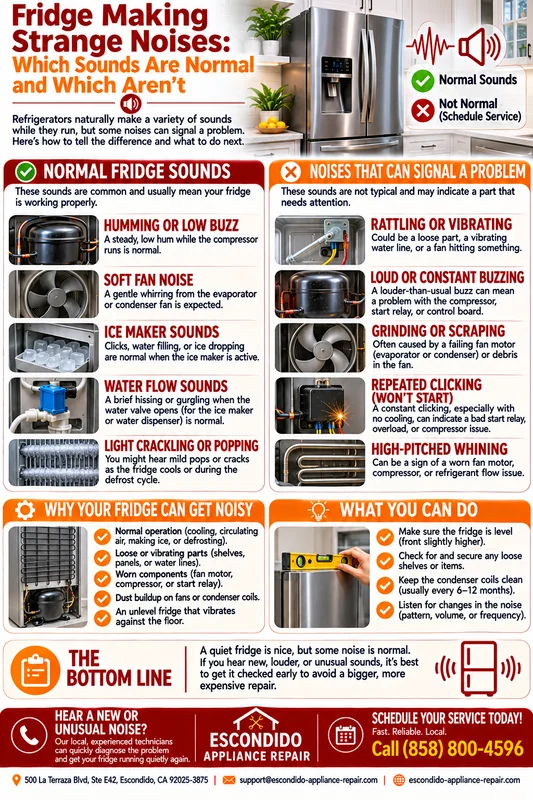
Normal Sounds You Can Ignore
Low humming. This is the compressor and fans doing their job. A steady hum while the fridge is running is expected.
Gurgling or bubbling. Refrigerant flowing through the coils makes this sound. It is often noticeable right after the compressor shuts off.
Popping or cracking. Plastic parts expand and contract as temperatures change. This is especially common during defrost cycles.
Sizzling or hissing during defrost. Water dripping onto the warm defrost heater makes a brief sizzle. It is completely normal.
Ice dropping. The ice maker dumps cubes into the bin with a clatter. Water filling the ice maker can also create a buzzing sound for a few seconds.
Clicking at start and stop. A single click when the compressor turns on or off is normal.
Sounds That Signal a Problem
Loud buzzing that does not stop. Constant buzzing may point to a failing compressor or a bad water inlet valve. If your fridge has no water line connected but the ice maker is switched on, the valve can buzz too.
Repeated clicking every few minutes. If the fridge clicks but the compressor never starts, the start relay or overload may be failing. Sometimes the compressor itself is struggling. Do not wait on this one. It often comes before total cooling failure.
Squealing or chirping. This usually comes from a worn evaporator fan or condenser fan motor. The sound may get louder when you open the freezer door, since that fan sits inside.
Grinding or scraping. Ice buildup can hit fan blades. You may also hear a dying fan motor bearing. Either way, airflow is at risk.
Rattling. Sometimes this is just loose items on top of the fridge or a drain pan shaking. If it comes from the back or bottom, a condenser fan or loose part may be the cause.
Knocking from the back. A compressor that knocks or bangs loudly when starting or stopping needs attention.
Quick Checks for Noisy Fridges
- Make sure the fridge is level and not touching walls or cabinets
- Remove items stored on top of the fridge
- Check that the drain pan is seated properly
- Clean dust from the condenser fan and coils
- Listen to identify whether the noise comes from inside or behind the unit
A fridge that sits slightly crooked can vibrate against nearby surfaces. Adjusting the front legs often quiets it down.
Why Noise Changes Matter
You know how your fridge normally sounds. When that changes, pay attention. A new noise usually means something is wearing out. Fans and relays are relatively affordable repairs when caught early. Once they fail completely, the fridge can warm up and spoil food. Strain on other parts can also follow.
When to Call a Technician
Call a pro if you notice:
- New squealing, grinding, or knocking
- Clicking without cooling
- Noise along with warmer temperatures inside
- Sounds that keep getting louder
Noises After Moving or Installing a Fridge
A new or recently moved refrigerator often sounds louder at first. It needs time to settle and reach its normal temperature. During the first day, the compressor runs longer than usual. That is normal.
If you moved an older fridge, give it a few hours upright before plugging it in. Oil in the compressor needs time to settle back where it belongs. Also make sure the water line was not kinked or pinched during the move.
Modern Fridges Sound Different
Many newer refrigerators use variable speed compressors. Instead of switching fully on and off, they run longer at lower speeds. You might hear a quieter hum that seems to never stop. That is by design and usually means better efficiency.
High efficiency models also use more fans and electronic valves. They can make soft clicks and whooshing sounds that older fridges never made. If you just upgraded, give yourself a week to learn its normal sounds.
Built in and counter depth models can also sound louder simply because of where they sit. Cabinets on both sides reflect sound back into the kitchen. Hard floors and open layouts amplify it further. Before assuming a problem, compare the noise to a quiet night when the house is still. If the sound is steady and the fridge stays cold, it is usually fine. Learning those sounds early helps you notice right away when something new or unusual shows up down the road.
Expert Refrigerator Repair in Escondido
At Escondido Appliance Repair, refrigerator diagnosis is something we do every single day. Since our founding in 2001, we have heard just about every sound a fridge can make. Our technicians have over 15 years of experience with standard, built in, and smart models. Tell us what you hear, and we will track down the source before that new noise becomes a bigger problem.