
Repair or Replace? How to Decide for Each Major Appliance
When an appliance quits, you face a choice. Spend money fixing it, or spend more on a new one. Neither option feels great in the moment. But the right decision can save you hundreds, sometimes thousands, of dollars.
General rules help. Still, each appliance has its own quirks. Here is how to think through the repair or replace question for each major appliance in your home.
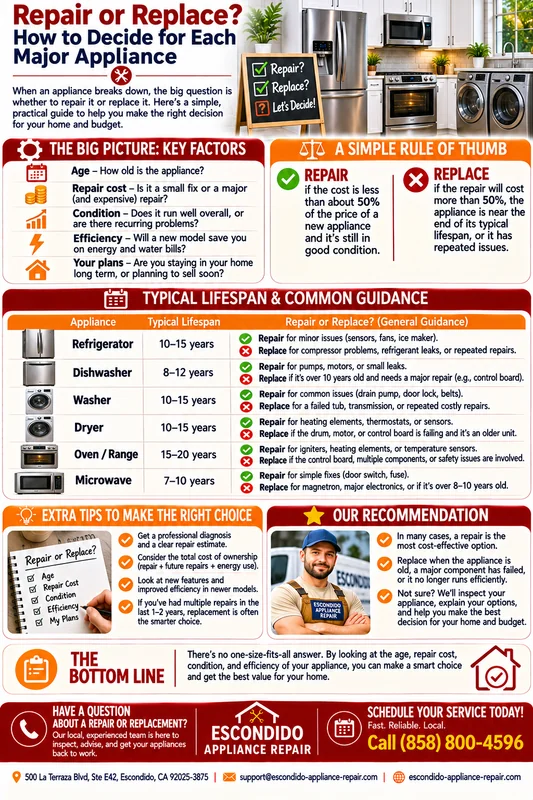
Three Questions to Ask First
Start with these before looking at specific appliances.
How old is it? Compare its age to its typical lifespan.
What will the repair cost? Compare that number to the price of a similar new model.
How has it performed lately? One repair in ten years is very different from three repairs in two years.
If the appliance is young, the repair is moderate, and the history is clean, fix it. If all three point the other way, replacing may be smarter.
Refrigerators
Fridges are often worth repairing. Fans, defrost parts, ice makers, and control boards are common fixes that cost far less than a new unit. Built in models from premium brands are almost always worth fixing.
Sealed system repairs are a tougher call. Replacing a compressor or fixing a refrigerant leak is expensive. On a fridge older than ten years, that money may be better spent on a replacement.
Washing Machines
Pumps, lid switches, door locks, and belts are affordable repairs. Fix them without much thought on a machine under eight years old.
Bearing failure on a front load washer is a bigger decision. It often requires taking apart much of the machine. On an older washer, replacement usually wins. On a high end model, repair can still make sense.
Dryers
Dryers are relatively simple machines. Heating elements, igniters, belts, rollers, and thermal fuses are inexpensive to replace. In most cases, repairing a dryer is the clear choice. Even older dryers can run for years after a basic repair.
One exception is a rusted drum or a failed main control on a budget model.
Dishwashers
Dishwashers have a shorter lifespan than most appliances. If yours is over eight years old and needs a pump or control board, compare prices carefully. Basic dishwashers are fairly affordable to replace.
For premium brands or newer machines, repairs on pumps, inlet valves, and heaters are usually worth it. Keep in mind that hard water in our area can shorten dishwasher life.
Ovens and Ranges
Ranges are built to last. Igniters, elements, and sensors are affordable fixes, even on older units. Gas ranges in particular often run well past 15 years.
Control boards on high end ranges can be pricey, but the range itself is pricier. Repair usually still comes out ahead.
Microwaves
Countertop microwaves are inexpensive. Unless it is a premium model, replacing usually makes sense when something major fails.
Over the range and built in microwaves cost more and require installation. Repairing these often saves money and avoids matching issues with cabinets.
Think About Energy and Features
A new appliance may use less energy, which lowers monthly bills. That said, savings on a newer fridge or washer may take many years to offset the purchase price. Do not replace a working appliance purely for efficiency unless the old one is very inefficient.
Also consider the environment. Repairing keeps a bulky appliance out of the landfill.
Hidden Costs of Replacing
A new appliance price tag is only the beginning. Delivery, installation, and haul away fees can add a few hundred dollars. Built in models may need cabinet changes. Gas appliances require a proper connection and leak test. A new dishwasher might need new supply and drain lines.
There is also the learning curve. New controls, cycles, and smart features take time to figure out. None of this is a reason to avoid replacing. But it should be part of the math.
When Replacing Is Clearly Better
Some situations make replacement the obvious choice:
- Rust has eaten through the tub or cabinet
- The appliance has gas or electrical hazards that cannot be fixed safely
- Parts are discontinued and not available anywhere
- An older unit needs a repair costing over half the price of a new one
In these cases, investing in repairs only delays the inevitable.
If you do decide to replace, ask about recycling the old unit. Many retailers haul away old appliances for free or a small fee. Local waste haulers can also pick up old units. Old refrigerators contain refrigerant that must be handled properly, so never leave one on the curb with the doors attached. Responsible disposal protects the environment and keeps you in line with local rules. Ask about it when you schedule your delivery.
Get an Expert Opinion
A good technician should help you make this decision, not push you one way. Escondido Appliance Repair has been giving neighbors straight talk about their appliances since 2001. With more than 15 years in the field, our team bases every recommendation on real numbers. We will tell you if a repair makes sense or if your money is better spent on something new.