
Washer Won’t Drain: Causes, Quick Checks, and When to Call a Pro
The cycle ends and you find a tub full of murky water. Soggy clothes, a mess on the floor waiting to happen, and a laundry pile that keeps growing. A washer that will not drain is stressful, but the cause is usually straightforward.
Below are the likely reasons, the checks you can do yourself, and the signs it is time for a pro.
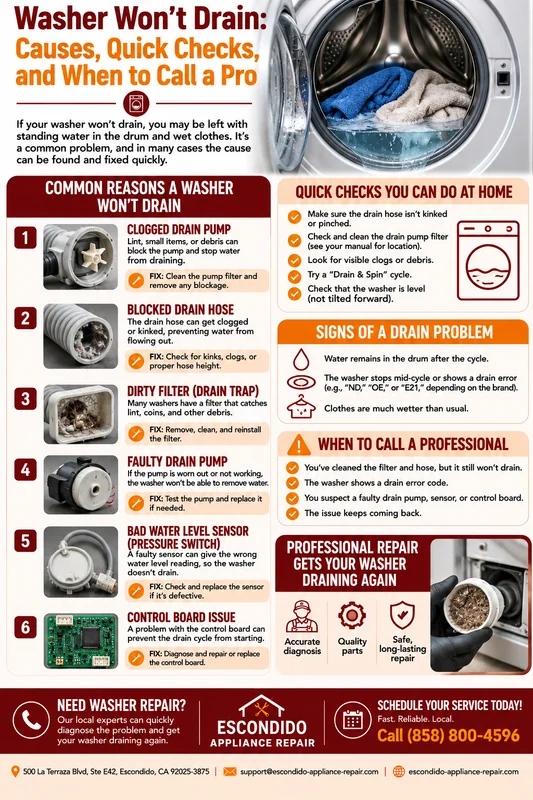
First, Stay Safe
Unplug the washer before you do anything. Water and electricity are a bad mix. Then grab some towels, a shallow pan, and a bucket. You will likely need to drain water by hand before checking anything else.
Check the Drain Hose
The drain hose runs from the back of the washer to a standpipe or utility sink. Pull the washer away from the wall and inspect it carefully.
- Look for kinks, especially if the machine was recently moved
- Make sure the hose is not crushed against the wall
- Disconnect it and check for clogs like socks or lint wads
A simple kink causes more no drain calls than you might think. Straighten it out, run a drain cycle, and see if water flows.
Clean the Pump Filter
Most front load washers have a small access panel near the bottom front. Behind it is a coin trap or pump filter. This filter catches coins, hair ties, buttons, and lint before they reach the pump.
Place a pan underneath and slowly unscrew the filter. Water will pour out, so go slow. Clear any debris and screw it back in tight. Many top load models do not have an accessible filter, so check your manual.
Look at the Household Drain
Sometimes the washer is fine and the problem is your plumbing. If water backs up out of the standpipe, the household drain line is clogged. You might also notice gurgling in nearby sinks. In that case, you need a plumber rather than an appliance technician.
Signs of a Failed Drain Pump
The drain pump pushes water out of the tub. When it fails, you might notice:
- A humming sound during the drain cycle but no water moving
- Loud grinding or rattling from an object stuck in the impeller
- Total silence when the washer should be draining
A pump can fail from age or from debris breaking the impeller blades. Replacing it is a common repair and much cheaper than a new washer.
The Lid Switch or Door Lock
Washers will not drain or spin if they think the door is open. On top load machines, a bad lid switch can stop the cycle cold. On front load models, a faulty door lock assembly does the same thing. You may see an error code on the display. A technician can test these parts quickly.
Control Board Issues
Less often, the main control board stops sending the signal to drain. This is more likely after a power surge. Diagnosing a control problem takes proper testing equipment. Swapping parts on a guess can get expensive fast.
Habits That Prevent Drain Problems
A few simple habits keep your washer draining well for years.
- Empty pockets before every load
- Use mesh bags for socks, bras, and small items
- Use the right amount of HE detergent, since excess suds slow draining
- Clean the pump filter every few months on front load models
These small steps protect both the pump and your clothes.
Signs a Drain Problem Is Coming
Washers usually give hints before they stop draining completely. Clothes that come out wetter than usual are one clue. A spin cycle that seems shorter or quieter is another. You might also notice small puddles near the front of the machine after a load.
Pay attention to new noises during the drain phase too. A rattle that comes and goes often means something small is bouncing around the pump. Catching it early can save the pump from damage.
What to Do With Wet Laundry
Do not leave soaked clothes sitting in the drum for long. Within a day, they can start to smell and grow mildew. Wring them out by hand or take them to a laundromat to finish the cycle. Running them through your dryer while soaking wet is a bad idea. It strains the dryer and rarely gets them fully dry.
Is It Worth Fixing?
A drain pump or lid switch repair costs far less than a new washer. On a machine under ten years old, fixing it is almost always the smarter choice. Older washers with rusted tubs or worn bearings may be ready to retire.
Front load models with failing bearings are a tougher call. That repair takes hours of labor. A technician can give you an honest estimate and help you weigh it against the price of a new machine. Either way, a quick diagnosis keeps you from spending money on guesses. Most of the time, the news is better than people expect. Pump repairs are usually quick.
When to Call for Washer Repair
Cleared the hose and filter, but the tub still holds water? Then it is time to call a pro. Standing water can lead to mold, odors, and leaks under the machine. The sooner it is handled, the better.
Escondido Appliance Repair has been draining stubborn washers across Escondido, San Marcos, and Valley Center since 2001. Every tech on our crew has fixed washers for more than 15 years, on machines of every style and size. We diagnose the real cause and get your laundry routine back on track.