
Wine Cooler Not Cooling: Common Issues and Fixes
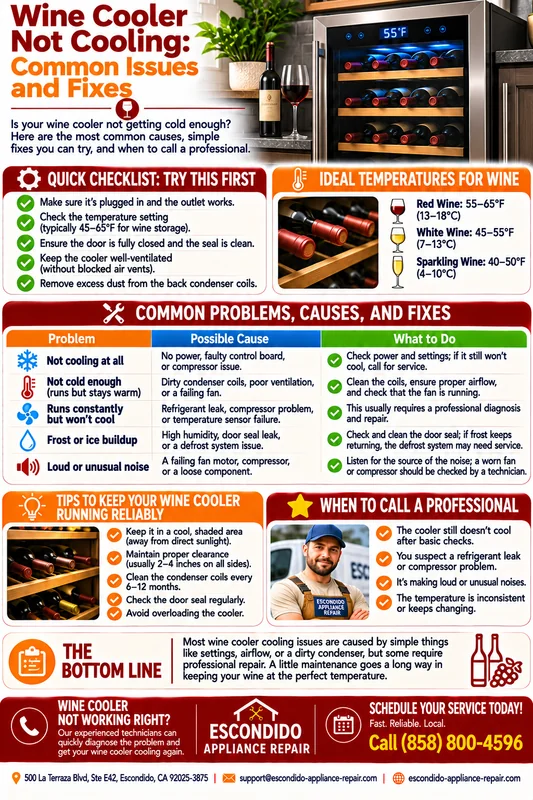
A good wine cooler keeps your bottles at a steady temperature, usually somewhere between 45°F and 65°F. When it starts running warm, your collection is at risk. Heat ages wine quickly and can ruin bottles you have been saving for years.
Wine coolers are not just small refrigerators. They use different cooling systems and have their own weak points. Here is what typically goes wrong and how to fix it.
Know Your Cooling System
Wine coolers use one of two technologies.
Compressor coolers work like a standard fridge. They handle larger capacities and warmer rooms well. They are common in built in and larger freestanding units.
Thermoelectric coolers use an electric current across a special module to move heat. They are quiet and vibration free. However, they struggle when the room gets warm. Most can only cool about 20 to 25 degrees below room temperature. That last point matters a lot in Escondido. On a 90 degree summer afternoon, a thermoelectric unit in a hot room simply cannot keep up.
Check the Location
Placement is the first thing to examine. Wine coolers need airflow to release heat.
- Freestanding units need several inches of space around the back and sides
- Built in units need a clear front vent at the bottom
- Keep the cooler out of direct sunlight
- Avoid placing it near ovens, dishwashers, or heat vents
A freestanding cooler installed under a counter often overheats. It is not designed to vent from the front.
Look at the Settings
Check that the temperature is set correctly. Dual zone coolers have separate controls for each section. Make sure someone did not change a setting or turn on a display or showroom mode by accident.
Inspect the Door Seal
A leaking door seal lets warm air in all day. Look for gaps, tears, or stiff spots. Also check that the door closes fully. A slightly tilted cooler can keep the door from sealing. Adjust the leveling feet so the unit tilts back just a touch.
Clean the Vents and Fans
Dust is the enemy of every cooling system. Unplug the cooler and vacuum the vents and condenser area. In thermoelectric units, clean the heat sink fins on the back. Clogged fins trap heat and drastically cut cooling.
Listen to the Fans
Most wine coolers rely on fans to move air.
- Interior fan: Circulates cold air around the bottles.
- Exterior fan: Removes heat from the condenser or heat sink.
If either fan stops or makes grinding noises, cooling suffers. Fan motors are common and fairly affordable repairs.
Parts That Commonly Fail
Thermoelectric module. This is the heart of a thermoelectric cooler. When it fails, the unit stops cooling completely.
Temperature sensor. A faulty sensor can make the cooler think it is cold enough when it is not.
Control board. It manages the fans, cooling, and display. Power surges can damage it.
Compressor or start relay. In compressor models, these behave like the same parts in a fridge.
Refrigerant leak. Less common, but possible in compressor coolers.
Protect Your Wine Meanwhile
If your cooler is warming up, move the most valuable bottles somewhere cool and dark. An interior closet away from exterior walls works in a pinch. Keep bottles on their sides if they have natural corks.
Ideal Temperatures for Wine Storage
Different wines prefer different temperatures. Most long term storage happens around 55°F. Serving temperatures vary. Whites and sparkling wines are often served colder, around 45°F to 50°F. Reds usually taste best between 60°F and 65°F.
Dual zone coolers let you keep both types at their best. Single zone units work well if you mostly store one style or use the cooler for aging.
Humidity Matters Too
Wine coolers help control humidity, not just temperature. Corks can dry out in very dry air. That lets oxygen reach the wine. Escondido’s dry climate, especially during Santa Ana winds, makes this worth watching. Some coolers include a humidity tray or reservoir. Keep it filled if your model has one.
Avoid Vibration and Light
Constant vibration can disturb sediment in older wines. Place freestanding coolers on a solid, level floor away from washers and dryers. UV light also damages wine over time. Most coolers use tinted glass, but direct sunlight is still a bad idea.
Keep the cooler away from strong smells as well. Bottles stored for years can pick up odors through natural corks. Avoid placing it in a garage next to paint, fuel, or cleaning products. A quiet, cool, dim corner of the house is the ideal spot for both the cooler and the wine inside. If you store wine for investment, consider a professional storage facility for the most valuable bottles. Everyday bottles do just fine in a well placed home cooler.
Wine Cooler Repair in Escondido
Specialty units need a technician who understands them. Escondido Appliance Repair has serviced wine coolers and beverage centers since 2001. Our team has more than 15 years of experience with both compressor and thermoelectric systems. We will diagnose the cooling problem and help protect your collection. Give us a call today.